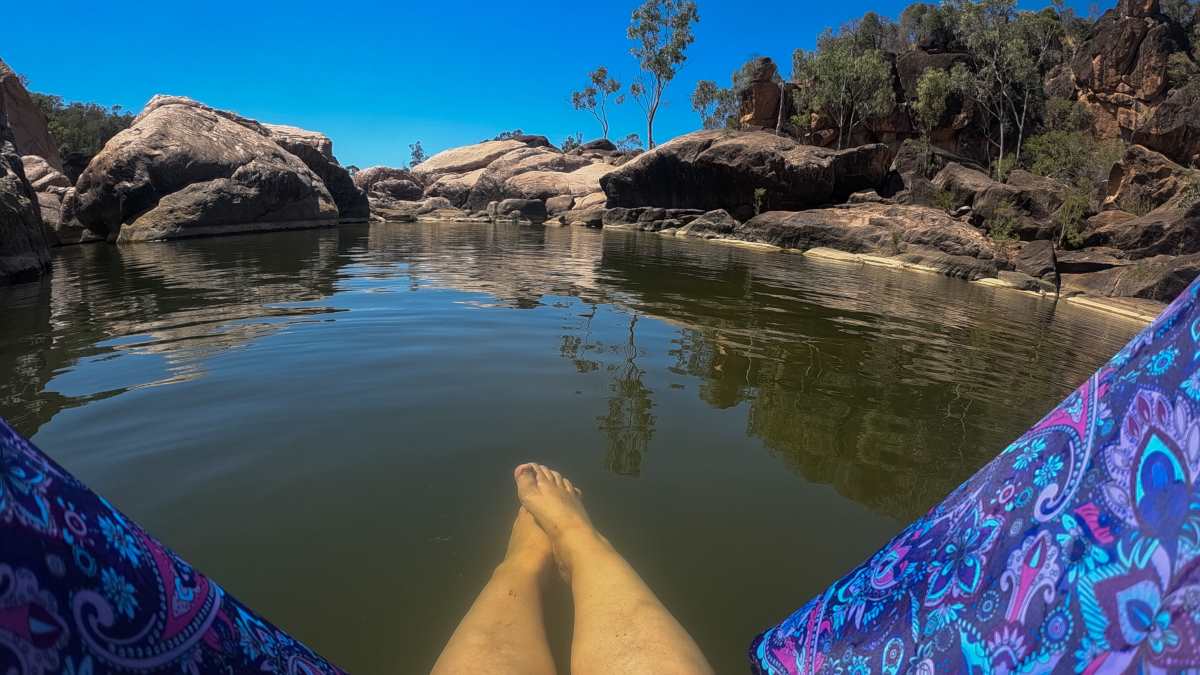
If your family loves discovering little-known places, scrambling over enormous boulders and camping somewhere that doesn’t involve squeezing your tent between a dozen other campers, Auburn River National Park might be right up your alley.
Tucked away in Queensland‘s North Burnett region, this small national park is home to a surprisingly spectacular granite gorge, walking tracks, natural rock pools and just five campsites.

We spent two nights camping here with the kids and, despite having visited plenty of Queensland national parks over the years, Auburn River was a pleasant surprise. It’s not a destination with fancy facilities, organised activities or a long list of attractions. Instead, it’s the sort of place where you can spend the morning exploring a rugged gorge and the afternoon relaxing around camp.
And for adventurous families, that’s a pretty good combination.
Where is Auburn River National Park?
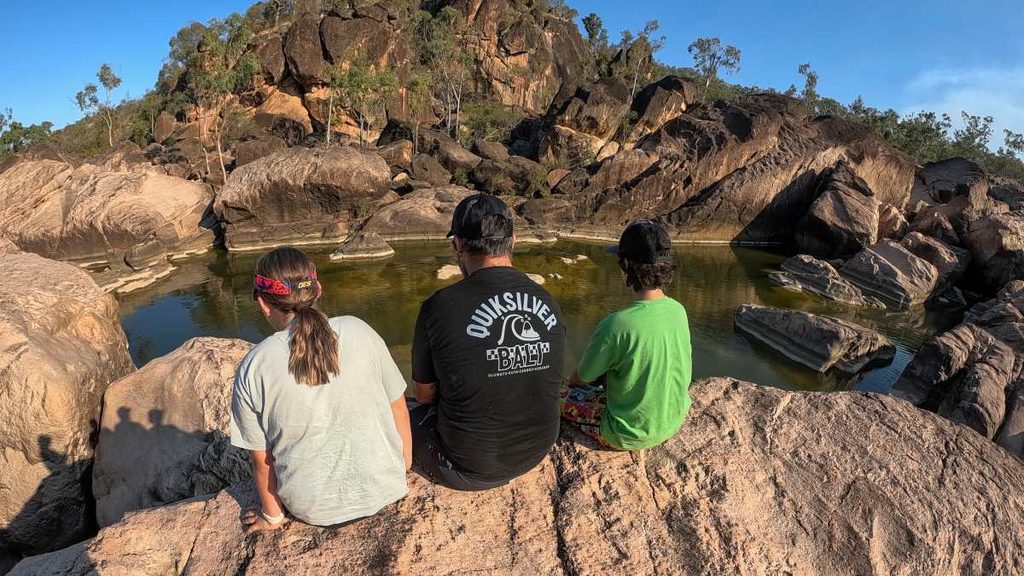
Auburn River National Park is located approximately 40km south-west of Mundubbera in Queensland’s North Burnett region. It’s around 410km north-west of Brisbane and 225km west of Maryborough, making it a potential weekend escape or a worthwhile addition to a longer Queensland road trip.
The park itself covers just 405 hectares, but what it lacks in size, it makes up for with its impressive natural scenery. The Auburn River has carved its way through the landscape, leaving behind steep rocky cliffs, enormous salmon-coloured granite boulders and natural pools that change with the river’s flow.
Things to do at Auburn River National Park
There are three official walking tracks at Auburn River National Park, all starting near the camping and day-use area. We completed all three during our stay, and while each offers something different, there’s one we’d happily return to do again.
Riverbed and Rock Pools Walk: The highlight of Auburn River National Park
- Distance: 1.5km return
- Difficulty: Grade 4
- Allow: At least 1 hour, longer if exploring and swimming at the gorge
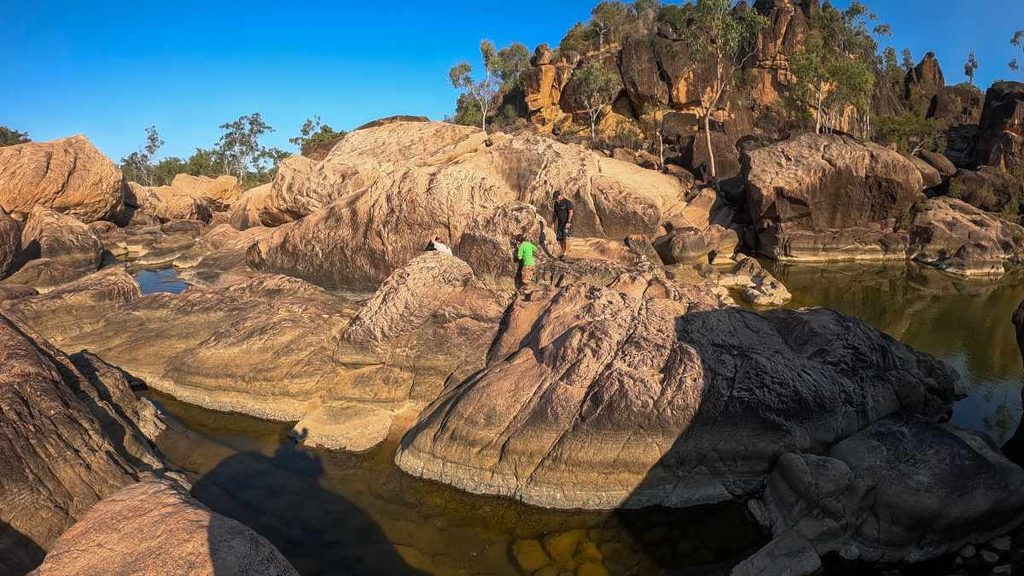
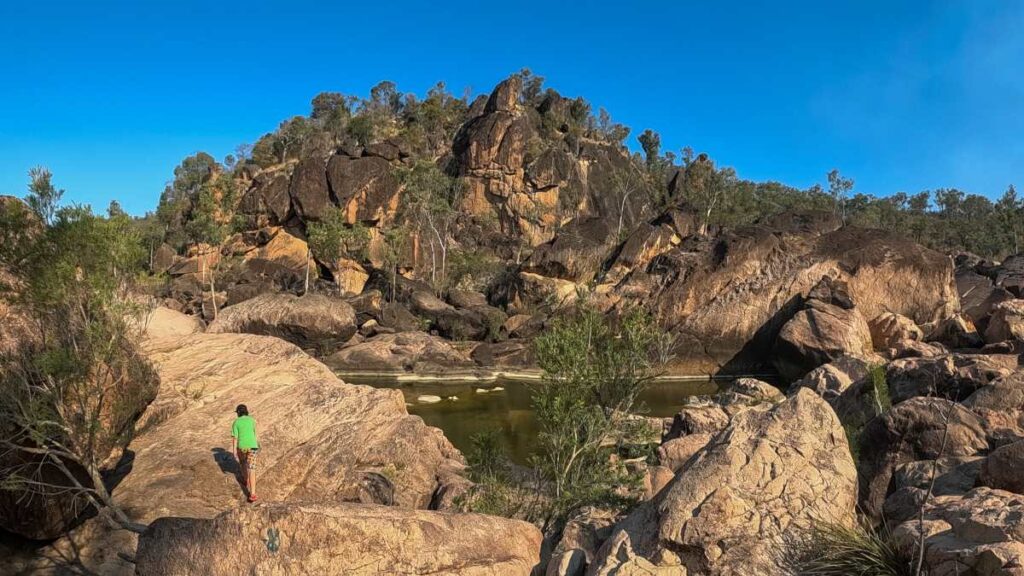
If you only have time for one walk at Auburn River National Park, make it this one. The Riverbed and Rock Pools Walk takes you down into the gorge, where you’ll find enormous granite boulders, rocky pools and a landscape that feels completely different from the bushland above.
The walk down is steep and rough in places, so you’ll need decent footwear and a reasonable level of fitness. And remember, what goes down must come back up!
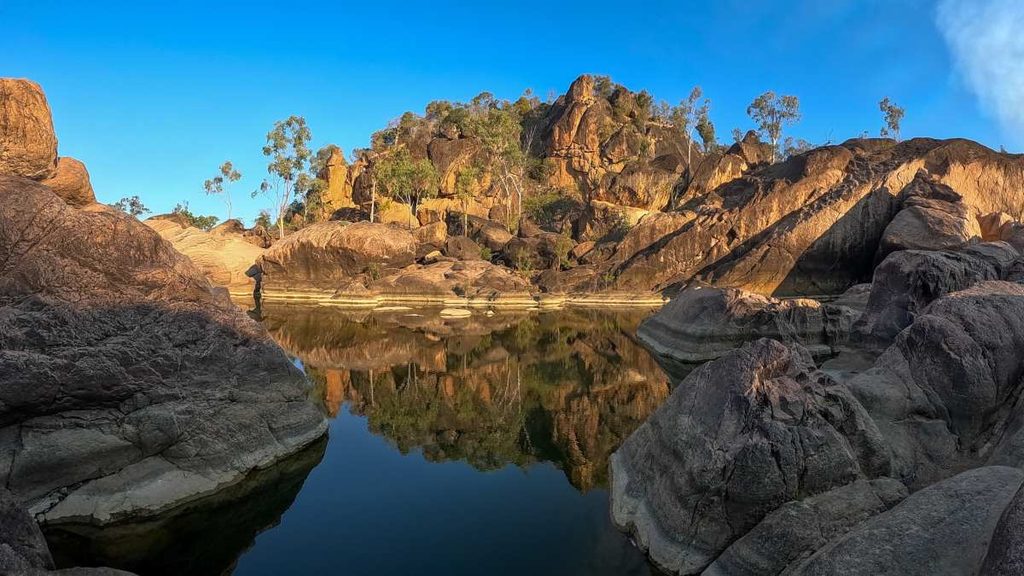
Once we reached the riverbed, the real fun began. The gorge is filled with massive granite boulders, some of which are beautifully smooth from years of water flowing over them. We also discovered something rather unexpected.
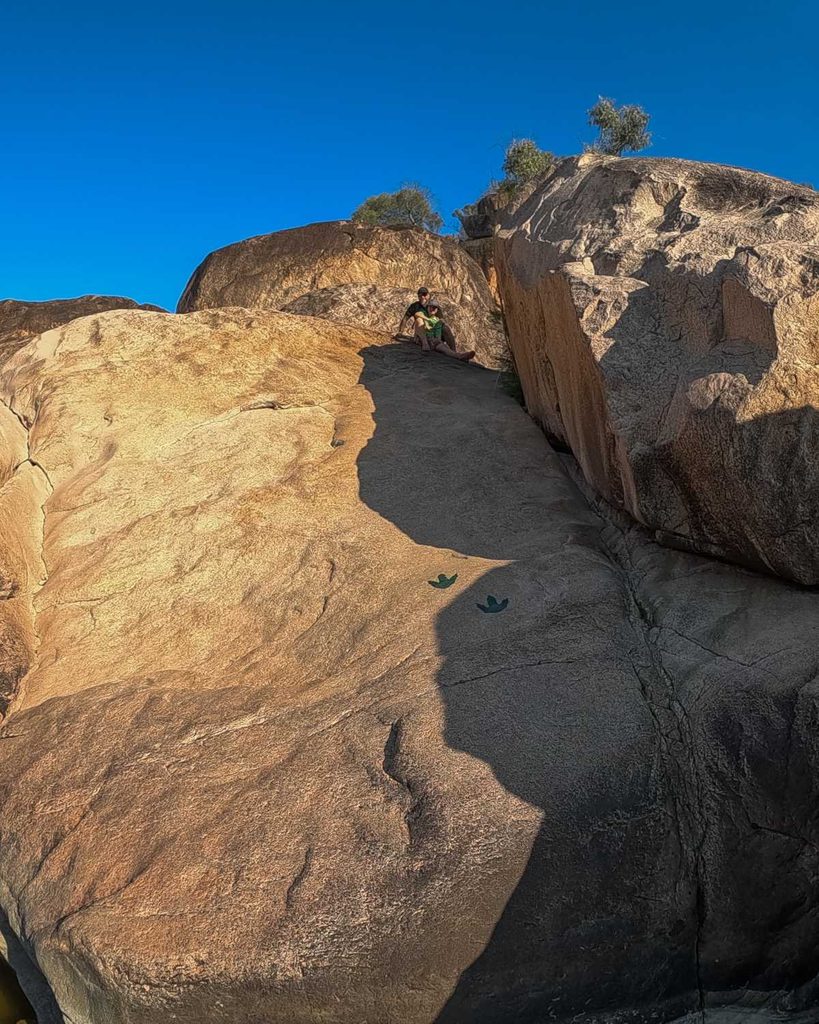
Someone has painted a trail of footprints across the rocks, and following them eventually leads to two enormous white rocks that look remarkably like dinosaur eggs. Well, what I imagine dinosaur eggs would look like.
Of course, they’re not dinosaur eggs. They’re naturally rounded rocks, but it’s a fun little discovery that gives some purpose to your exploring. A word of warning: Following the painted footprints involves some fairly serious rock scrambling, including sections that felt a little sketchy at times. This is not an official marked walking trail, and I wouldn’t recommend attempting it with young children or anyone uncomfortable scrambling over large rocks.
Fortunately, you don’t need to follow the footprints to enjoy the gorge. There’s plenty to admire around the riverbed without tackling the more difficult boulder sections. Depending on recent rainfall and river conditions, you may also find beautiful pools of water among the rocks.
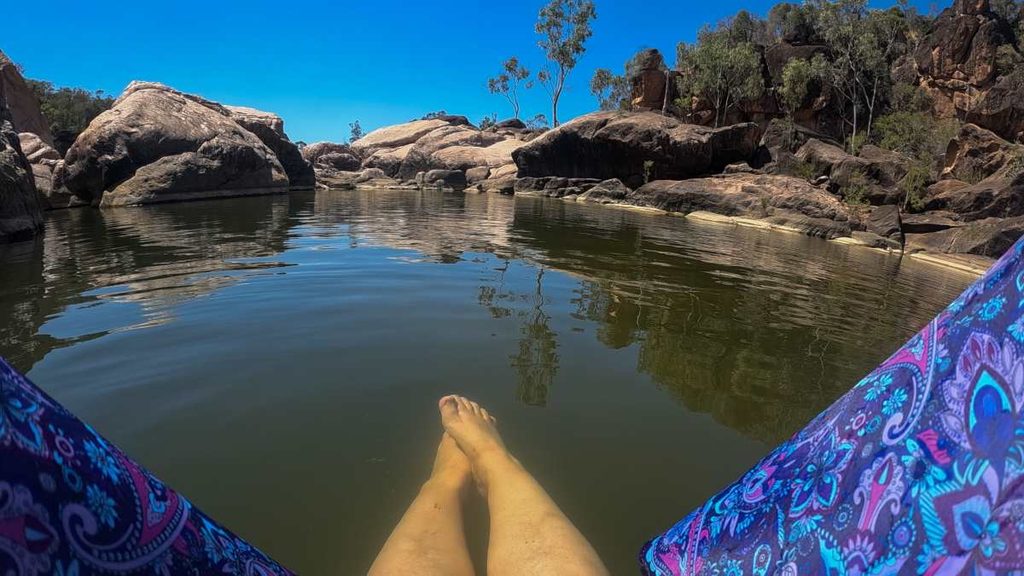
We were also lucky enough to find water in the rock pools, and yes, we went for a swim! After scrambling around those enormous granite boulders, cooling off in a natural waterhole was a pretty fantastic way to spend the afternoon. Of course, whether there’s water in the pools will depend on recent rainfall and river conditions. Natural swimming holes aren’t supervised and slippery rocks, submerged obstacles and changing water levels can make swimming dangerous.
📍 If rockpool swimming is your thing, read our guide to Utopia Rock Pools in Mount Walsh National Park.
Gorge Top Walk: A pleasant bushwalk with a rewarding view
- Distance: 3.2km return
- Difficulty: Grade 3
- Allow: 1.5 hours
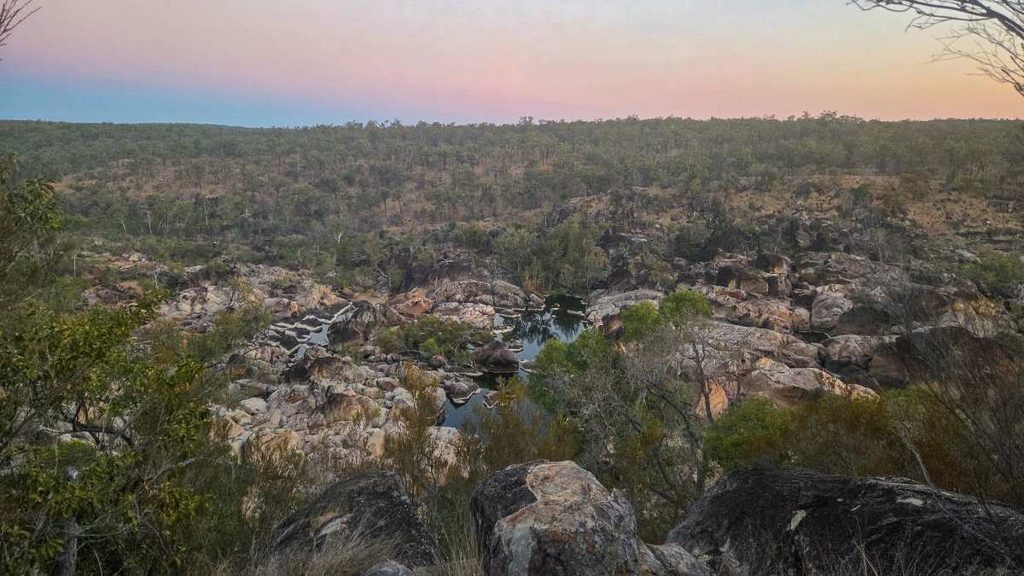
The Gorge Top Walk follows the upper edge of the gorge through open eucalypt forest. It’s a relatively gentle walk compared with the Riverbed and Rock Pools Walk and the track eventually leads to a lookout with views along the river and across the rocky gorge.
I’ll be upfront here. It’s a nice walk, but it’s not particularly exciting for most of the way. The scenery is pleasant rather than spectacular until you reach the lookout at the end. That said, the views are worth seeing, particularly when there’s water flowing through the gorge.
If you’ve got kids who enjoy bushwalking, it’s a good opportunity to stretch their legs and explore a different part of the park. Just keep an eye on them near the gorge edges.
Gorge Lookout Walk: Short, but a little disappointing
- Distance: 600m return
- Difficulty: Grade 3
- Allow: 15 minutes
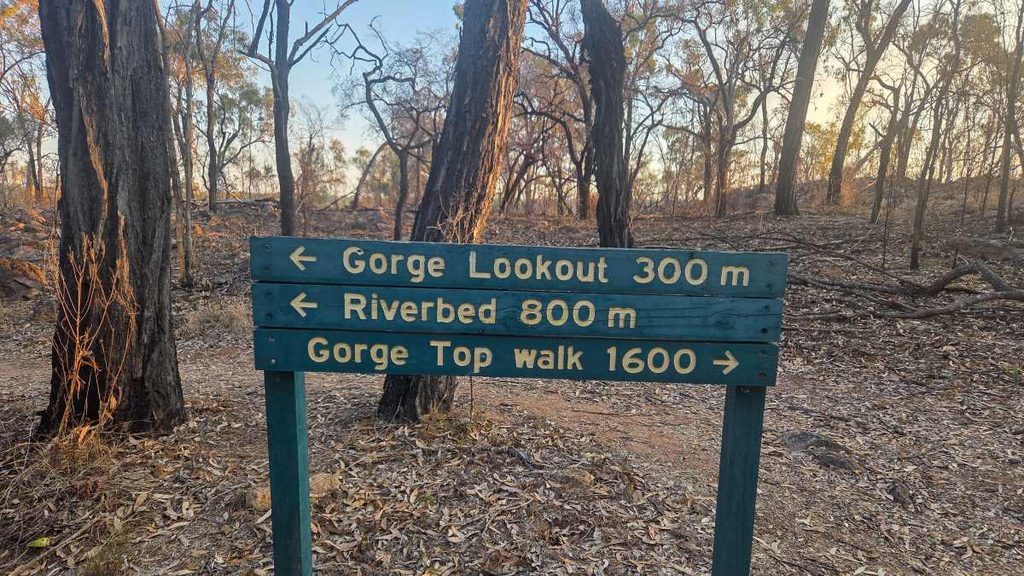
The Gorge Lookout Walk is the shortest of Auburn River National Park’s three walks so it’s an easy one to squeeze into your visit, especially if you don’t have much time. However, we found the views a little disappointing. The surrounding trees obscured much of the riverbed during our visit, making it difficult to appreciate the gorge below.
If you’re short on time, I’d prioritise the Riverbed and Rock Pools Walk or the Gorge Top Walk instead.
Camping at Auburn River National Park
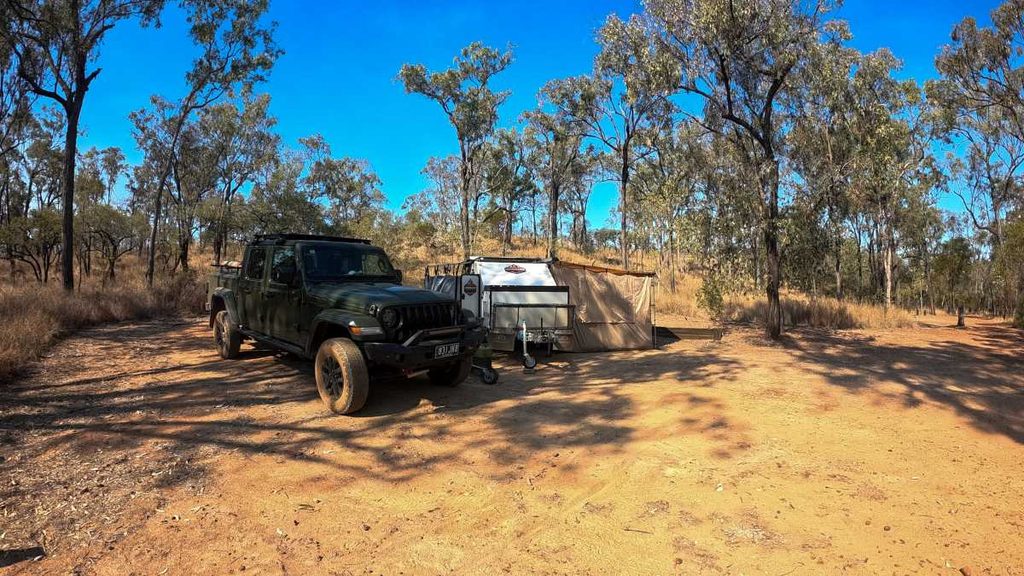
One of the things we loved most about Auburn River National Park was the camping. There are just five numbered campsites, set among natural eucalypt bushland above the river. We spent two nights in campsite number 3 and absolutely loved it. The site was spacious and cleared, yet surrounded by natural bushland, giving us plenty of room to spread out without feeling like we were camping on top of our neighbours.
Each site has a cleared camping area with a firepit, with surrounding vegetation providing a lovely sense of separation from neighbouring campers. The campsites feel like individual little pockets tucked into the bush.
What facilities are available?
Auburn River National Park is a basic national park camping experience.
Facilities include:
- Five bookable campsites suitable for various camping setups
- Fire rings, with fires subject to restrictions
- Toilet facilities in the nearby day-usearea around 100 metres walk from the campsite
- A nearby day-use area with picnic tables and a gas barbecue
- Access to the park’s walking tracks
There are no powered sites, drinking water supplies, rubbish bins or caravan park-style recreational facilities. We brought our own composting toilet so I can’t comment on what the public toilet was like here.
You’ll need to be self-sufficient, particularly when it comes to drinking water, cooking equipment and taking your rubbish home. The campsites can accommodate tents, camper trailers, caravans, campervans and motorhomes, although the individual parking areas vary in size. Check the campsite specifications before booking.
Is Auburn River National Park camping suitable for families?
Absolutely, provided your family enjoys a more traditional bush camping experience. We loved having plenty of room to spread out, with the natural bushland surrounding the campsites. It’s a great place for families who enjoy campfires, bushwalking and exploring the outdoors.
However, if your idea of a family camping holiday involves a swimming pool, playground, camp kitchen and hot showers, this probably isn’t the campground for you.
Booking tip: Camping permits are required, and there are only five sites, so book ahead through Queensland Parks. Check current booking arrangements and park alerts before travelling.
Getting to Auburn River National Park
Auburn River National Park is approximately 40km south-west of Mundubbera. From Mundubbera, follow Mundubbera-Durong Road for around 13km before turning onto Hawkwood Road. Continue for approximately 20km to the national park turn-off, then follow the rough unsealed access road for another 7km.
The campground is accessible by conventional vehicles in suitable conditions, although a 4WD is recommended during or after wet weather.
A very important Google Maps tip: Make sure you enter “Auburn River Campground” as your destination rather than simply “Auburn River National Park”. Otherwise, Google Maps may direct you to the opposite side of the gorge, leaving you quite a drive from the actual camping area.
It’s an easy mistake to make and one that’s best avoided, particularly after a long day on the road.
When is the best time to visit Auburn River National Park?
The cooler months are generally the most comfortable for camping and bushwalking, particularly if you plan to tackle the steep walk down into the gorge. Summer can be hot, and the exposed granite rocks may become uncomfortable during the middle of the day.
Rainfall also makes a difference to what you’ll see. The river and rock pools can look quite different depending on recent weather, and the gorge may be particularly impressive when water is flowing. However, wet conditions can also make the rocks slippery and the access roads difficult.
If it hasn’t rain for a while, it has the potential to be a bit manky and stagnant.
Always check the weather forecast, road conditions and park alerts before visiting. Avoid entering the gorge when heavy rain or flooding is possible.
What to bring to Auburn River National Park
Because Auburn River National Park is relatively remote and has limited facilities, it’s worth arriving prepared.
In addition to your usual camping gear, I’d recommend bringing:
- Plenty of drinking water
- Sturdy walking shoes with good grip
- A first-aid kit
- Sunscreen, hats and insect repellent
- A gas or fuel stove
- Rubbish bags
- Offline maps
- A torch or headlamp
- Suitable clothing for the weather
Mobile reception is unreliable, so don’t count on being able to look things up once you arrive. We had to break out the Starlink Mini here to get online.
If you’re planning to explore the gorge, make sure someone knows your plans and allow plenty of daylight for the return walk.
Is Auburn River National Park worth visiting?
For us, absolutely. We loved the peaceful camping, the generous space between sites and the feeling of being tucked away in the Queensland bush. But it was the gorge that really surprised us.
From above, you don’t necessarily appreciate just how impressive those enormous granite boulders are. It’s only when you make your way down to the riverbed that the landscape really comes into its own. The rock scrambling was a highlight for our family, although it’s definitely something to approach with caution and only attempt within your abilities.
Would I recommend Auburn River National Park for every family? Probably not.
If you’re travelling with very young children, the more challenging sections of the gorge may be unsuitable. And if you prefer camping with plenty of facilities and organised entertainment, you might find it a little too quiet. But if your family enjoys exploring, getting a little dusty and discovering places that aren’t on everyone’s Queensland holiday itinerary, Auburn River National Park is well worth considering.
We spent two nights camping here, scrambled over enormous granite boulders, followed mysterious dinosaur footprints and cooled off in natural rock pools. Not bad for a little-known Queensland national park! Sometimes the best family adventures are found in the places you’ve barely heard of.
Frequently asked questions about Auburn River National Park
Not necessarily. Conventional vehicles can access the camping area in suitable conditions, but the final section of road is unsealed and can become difficult after rain. A 4WD is recommended in wet weather.
Yes. There are five numbered campsites suitable for a range of camping setups, including tents, camper trailers and some caravans and motorhomes. Camping permits are required.
Natural rock pools contain water but the quality depends on recent rainfall and river conditions. However, swimming is not a supervised activity, and visitors should assess the conditions carefully. Slippery rocks, submerged hazards and changing water levels can make entering the water dangerous.
The Gorge Lookout Walk and Gorge Top Walk are Grade 3 tracks, while the Riverbed and Rock Pools Walk is a more challenging Grade 4 walk. Suitability depends on your children’s experience, fitness and confidence. The additional rock scrambling beyond the official riverbed walk is not suitable for young children or inexperienced scramblers.
You could explore the main attractions on a day trip, but staying one or two nights gives you more time to enjoy the gorge and peaceful camping area. We stayed two nights and found it a lovely short family escape.
Read next:
📌 Save this article to Pinterest so you’ll have it handy when planning your own trip.
Let me know what you think!