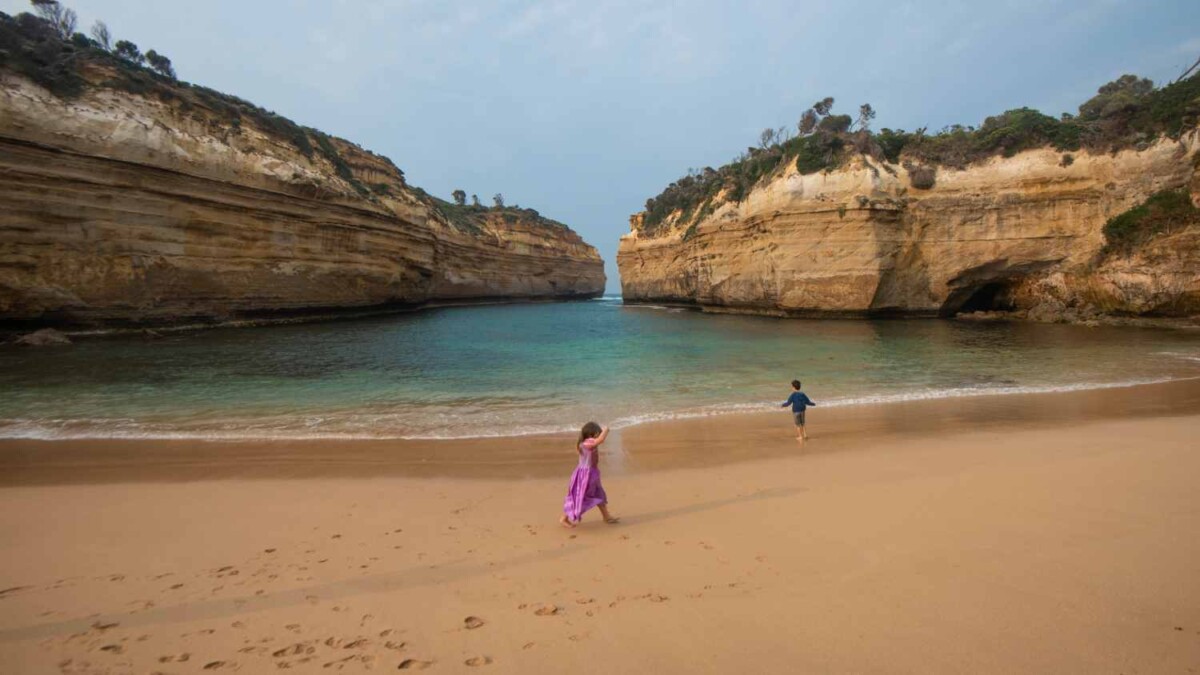
The Great Ocean Road drive is one of Australia’s most iconic road trips, stretching 243 kilometres along Victoria’s spectacular southern coastline from Torquay to Allansford. Along the way, you’ll pass surf beaches, dramatic limestone cliffs, rainforest walks and famous landmarks like the Twelve Apostles.
While it’s technically possible to drive the Great Ocean Road in a single day, this is a journey that deserves time. On our family road trip, we spent a week exploring beaches, seaside towns, wildlife and plenty of unexpected stops along the way.

Quick facts: Great Ocean Road drive
Length: 243 km
Start: Torquay, Victoria
Finish: Allansford near Warrnambool
Best time to visit: Spring to autumn
Recommended trip length: 2-3 days minimum (a week is better)
Great Ocean Road drive map and route overview
The Great Ocean Road drive runs for approximately 243 kilometres along Victoria’s spectacular southern coastline, connecting the surf town of Torquay with the small township of Allansford, near Warrnambool.
Most travellers begin their journey in Torquay, about 90 minutes south of Melbourne, and follow the winding coastal road westward through seaside towns, national parks and dramatic limestone cliffs shaped by the Southern Ocean. You can of course, drive it in reverse.
Some of the key stops along the Great Ocean Road route include:
- Torquay – The official start of the Great Ocean Road and home to famous surf beaches.
- Bells Beach – One of Australia’s most iconic surf breaks.
- Anglesea – A relaxed coastal town known for its river, beaches and resident kangaroos.
- Lorne – A popular seaside village with waterfalls, cafes and a beautiful main beach.
- Apollo Bay – Often considered the halfway point of the drive and a great place to stay overnight.
- Cape Otway Lightstation – Australia’s oldest surviving mainland lighthouse.
- Twelve Apostles – The most famous landmark on the Great Ocean Road.
- Loch Ard Gorge and London Arch – Dramatic limestone formations and coastal scenery near Port Campbell.
The Great Ocean Road drive offers some of the most spectacular coastal scenery in Australia, with countless opportunities to pull over and explore along the way.
We’ve included a video of our Great Ocean Road drive below so you can see the route and some of the highlights along the way:
This is what our Great Ocean Road family road trip looked like
It was a blustery day when I visited Bells Beach for the first time. The sky was overcast, threatening to turn an even darker shade of grey. The wind was unpleasant, blowing directly from the shore and peppering my young legs with yellow sand. So I hid under my parents’ oversized towel and sulked.
This memory came back to me as we drove towards the iconic surf beach, some 34 years later. I smiled to myself at the memory of a young girl hiding beneath her dad’s towel.
‘’What are you smiling at?’’ my husband asked.
I couldn’t really explain it. ‘’Oh, you know, just thinking,’’ I replied.
Bells Beach: first stop on our Great Ocean Road drive
Bell’s Beach was our first stop on the iconic Great Ocean Road drive, which begins south of Melbourne and stretches 243km from Torquay to Allansford. Although technically, you can drive it in a day, we have a whole week to explore its beaches, national parks, dramatic coastline and wildlife. This epic road trip from Queensland has been on our bucket list for a few years.
‘’Ugghhh stairs,’’ I moaned. ‘’Yes, stairs!’’ my seven-year-old son says excitedly. What a difference three decades make. Although I wonder if he and his sister will be so pleased about them when it comes time to walk back up them, rather than down.
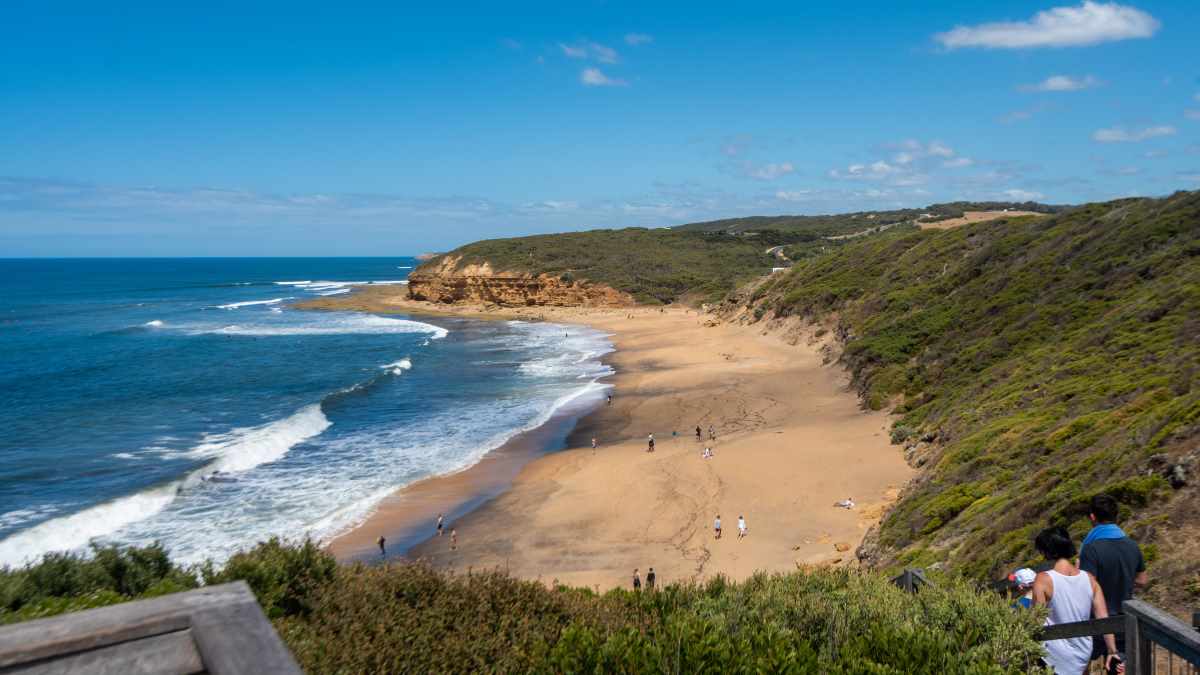
The feeling of dread vanished quickly as I stood at the top of the stairs, waiting for another family to ascend the last run before heading down ourselves. The scene is dramatic. A small bay between two green headlands, with contrasting yellow sand and the swells from the Southern Ocean producing the outstanding surf at Bells Beach. I was now excited about heading down those stairs.
Although too rough for my young kids to swim, they had a great time letting the edges of the waves chase their ankles on the sand. We strolled from one headland to another, exploring the rocky outcrop at the other end. We spotted birds nesting in a small overhanging shelf and searched for crabs in the rocks left behind by the outgoing tide. The kids played in the sand and I sat and watched the surfers.
Why you shouldn’t rush the Great Ocean Road drive
This is why you shouldn’t do the Great Ocean Road in one day. In one day, we would not have the pleasure of lingering.
Happily exhausted and hungry, we all trudge back up the stairs. The kids don’t complain anywhere near as much as I thought they would, even though their slow, plodding steps show they are tired. We go through the process of getting everything and everyone in the car. Wet clothes and towels in the back, kids buckled in, confiscate a mini-bucket half-filled with sand and last but not least, the adults flop into their seats in the front. We look at each other, both in need of caffeine.
The plan is just to drive the road with no destination in mind. I thought we would drive for an hour or so, but not even seven minutes up the road, I see a sign that makes my heart sing. I yell excitedly, ‘’chocolate and ice-cream!’’. Our youngest, who has nearly dozed off, immediately jerks her head up. ‘’Íce-cream?’’ she says excitedly, going from 0 to 100 in a second. “Yes, chocolate!” yells my son, a little too loudly.
We see another sign, which informs us to turn right for the ‘’Great Ocean Road Chocolaterie and Ice-Creamery“. Could today get any better?

The Great Ocean Road Chocolaterie and Ice-Creamery
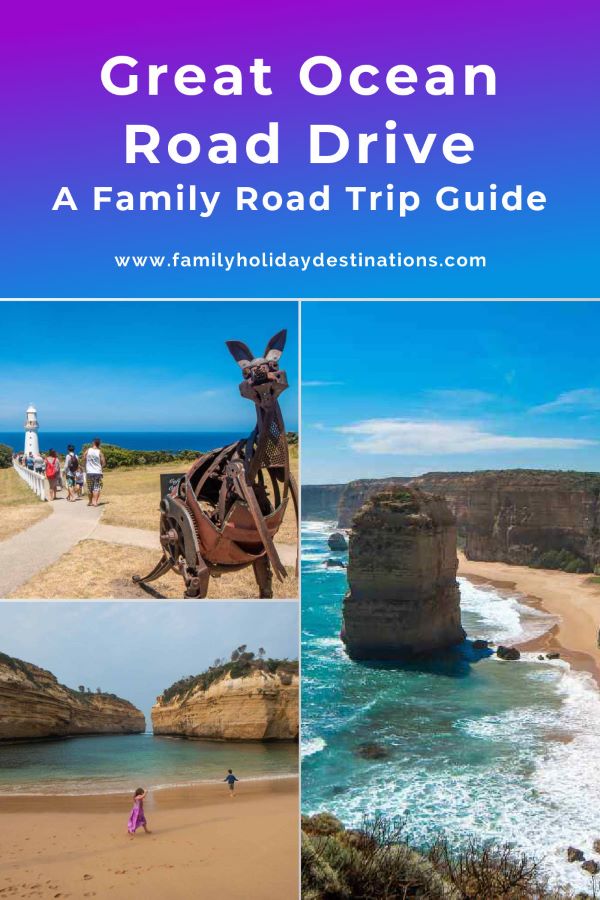
We park the car in a surprisingly large parking lot… exactly how big is this place? Turns out as far as chocolate and ice-cream shops go, this one is huge. A sign warns us to watch out for children, ducks and oompa loompas and although unfortunately, I didn’t spot the last of those three things, we did spot three bright kangaroo sculptures with various candy and ice-cream toppings. It’s starting to feel a little surreal.
Built in 2016, the Great Ocean Road Chocolaterie and Ice-Creamery certainly wasn’t here the last time I visisted three decades ago. We walk into a spectacular showroom filled with what I imagine is to be thousands of chocolates and desserts. This is a great opportunity to buy a gift.
Although we timed it wrong, families can join in daily hosted tasting sessions, adult-free junior chocolatiere classes, high teas and rocky road making sessions. You can also watch the Chocolatiers at work through giant viewing windows. The Chocolatiers are part of the Cocoa Horizons program, supporting farmers and communities and ensuring their cocoa is sustainably sourced.
Ice-cream vs chocolate… oh the dilemma!
Due to the summer Victorian heat, we opt for ice-cream over chocolate. A word of warning, the serving sizes here are ridiculously large. One scoop really is enough, especially for a small child. Loaded up with ice-creams in both cones and cups, we quickly realize that although the all-day cafe is large, it’s also busy at this time of day. There are no tables left!
No worries, we head outside and have a picnic on the grass. Our grass seat turned out to be a better option as the kids went wild as soon as the ice cream ran out. Clearly, the owners are aware of the effects of chocolate and ice-cream on children, as they have built a fence around a large grassy area, added a sandpit and a walk-through garden, and have thrown in some soft, round balls. All in all, it’s a fantastic way for parents to relax and the kids to go wild within the confines of the convenient fence. It’s also the perfect opportunity to top up caffeine levels.
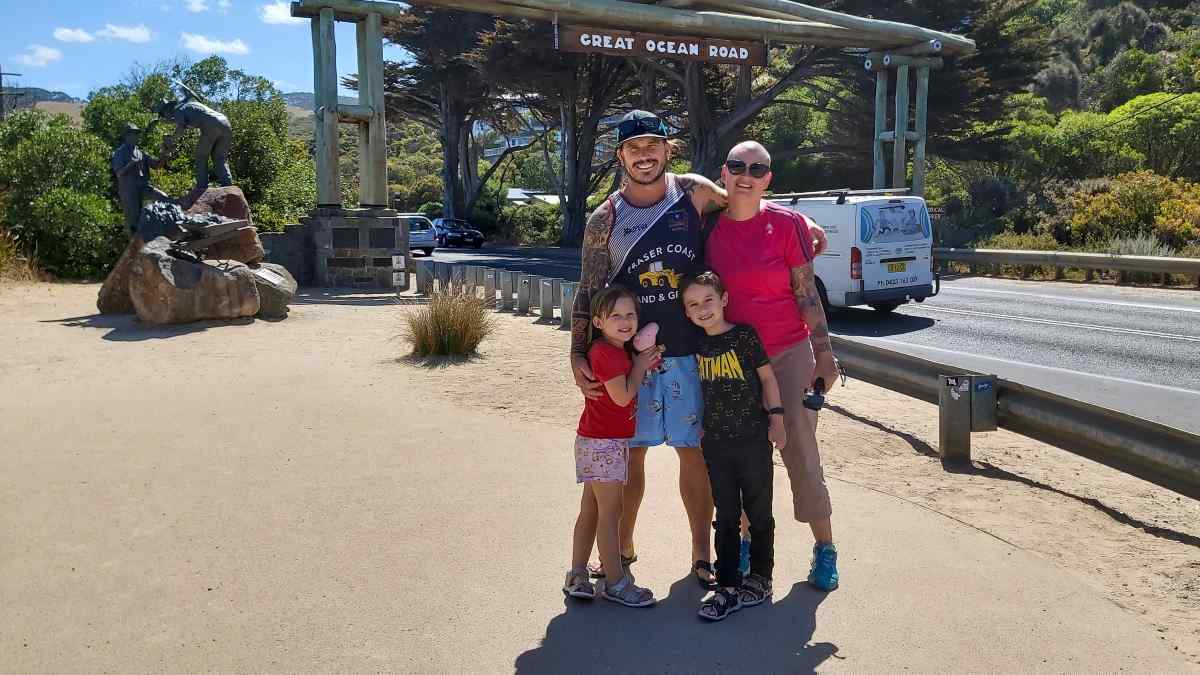
By now, it’s mid-afternoon on day one of our Great Ocean Road seven-day adventure, and we have only travelled 12.4 km since our starting point in Torquay. We are staying at a HipCamp near Lorne, and decide to head there and call it a day. The short journey was supposed to take around 40 minutes, but we were distracted by the stunning beaches we passed in Anglesea and by the Memorial Arch at Eastern View, where you can take your obligatory road trip selfie under the arch that proudly displays the words, ‘’Great Ocean Road’’.
Highlights to expect on a Great Ocean Road Road trip
Lorne
Lorne is a charming, artsy town that has it all, from bush, beaches and waterfalls. There are no less than 10 waterfalls within 10 kilometres of Lorne and the main beach is superb. I don’t think we could have chosen a nicer place to camp. There are plenty of different accommodation options and some really great cafes, but be warned, visitor numbers swell in Lorne during the summer school holiday periods and getting a parking spot can be frustrating.
If you time your visit right, you can experience the Lorne Sculpture Biennale, Victoria’s largest free public outdoor sculpture event. The Biennale celebrates the best in contemporary Australian and international sculpture in one vibrant festival.
Apollo Bay
Sometimes referred to as ‘’paradise by the sea, Apollo Bay is around midway along the Great Ocean Road drive, so it’s a great place to base yourself. Just a few kilometres from town are rainforest-filled valleys, streams and waterfalls.
Watersports are popular here, with plenty of swimming, surfing and fishing, and the walks down the road a little further at Cape Otway are said to be among the most breathtaking in the country, with petrified forests, fireflies and some of the highest ocean cliffs in Victoria.
Cape Otway Lightstation
A little detour is required to visit the Cape Otway Lightstation, but oh, what a detour it is! The road lazily winds through the Cape Otway National Park and if you are suddenly confronted by a bunch of cars parked on the side of the already narrow road, with travellers standing around looking upwards, it’s worth pulling over too. This usually means koalas in the trees!
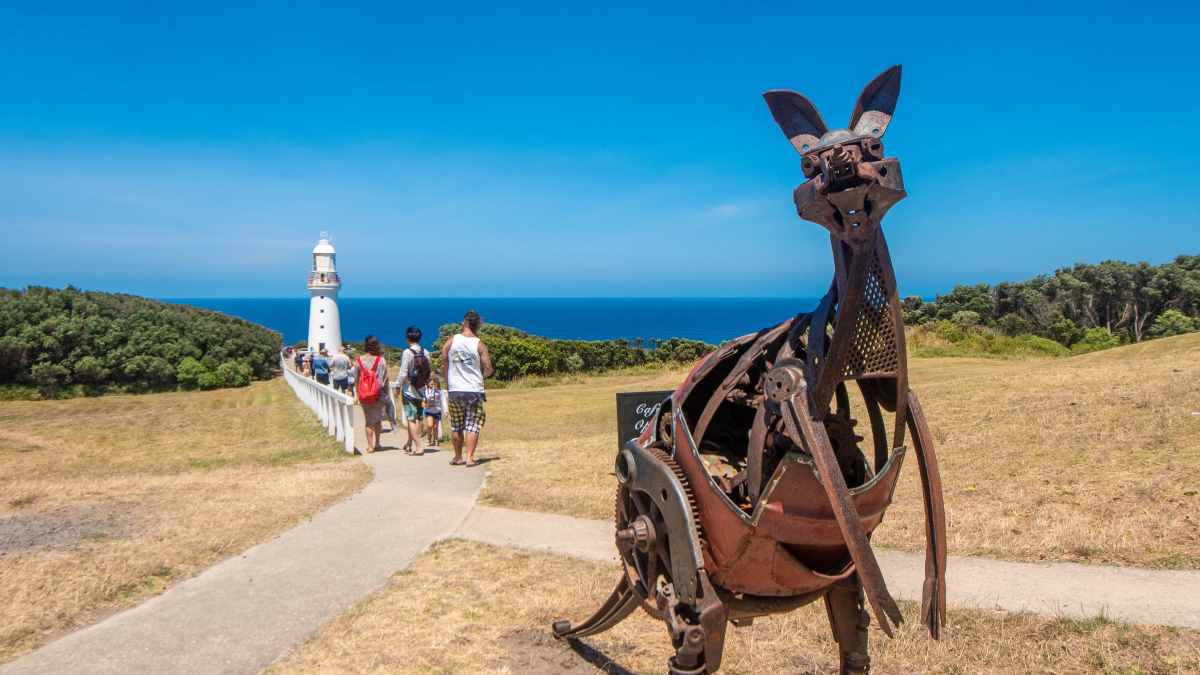
Built in 1848, Cape Otway Lighthouse is the oldest surviving lighthouse on mainland Australia. There’s an entry fee here that I initially balked at, but later concluded was worth every cent, as it’s not ‘’just’’ a lighthouse you’re visiting.
Families can roam the surrounds on a self-guided walk, discovering the historic buildings and learning about the history of the Cape Otway Lightstation. The best part is that you are still allowed inside the lighthouse, where you can tramp up the spiral staircase to be assaulted by strong winds, and be provided with magnificent views of the dramatic Victorian coastline.
12 Apostles
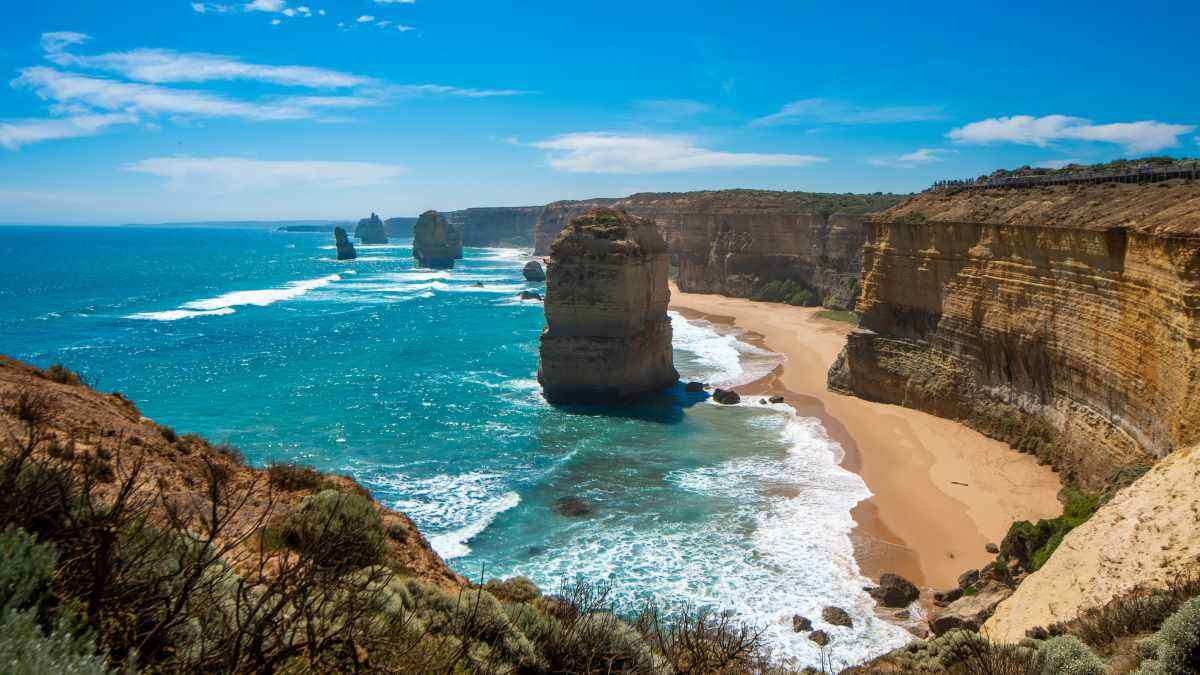
Dramatic 24 hours a day, but particularly glorious at dusk and dawn, the 12 Apostles in the Port Campbell National Park are a well-known highlight on the Great Ocean Road. Over time, forces of nature have eroded softer sections of the limestone, which eventually formed caves that became arches. When these arches collapsed, they left behind the stacks, some as high as 45 metres, that we see today.
There are only eight remaining stacks since they were first discovered, with majestic cliffs rising around 70 metres high against the force of the ocean that surrounds them. Pay a visit to the Twelve Apostles Centre for parking and walk through the tunnel under the Great Ocean Road to access the various lookouts with breathtaking views. If you’re up for a splurge, scenic helicopter flights can be taken as well.
Loch Ard Gorge and London Bridge
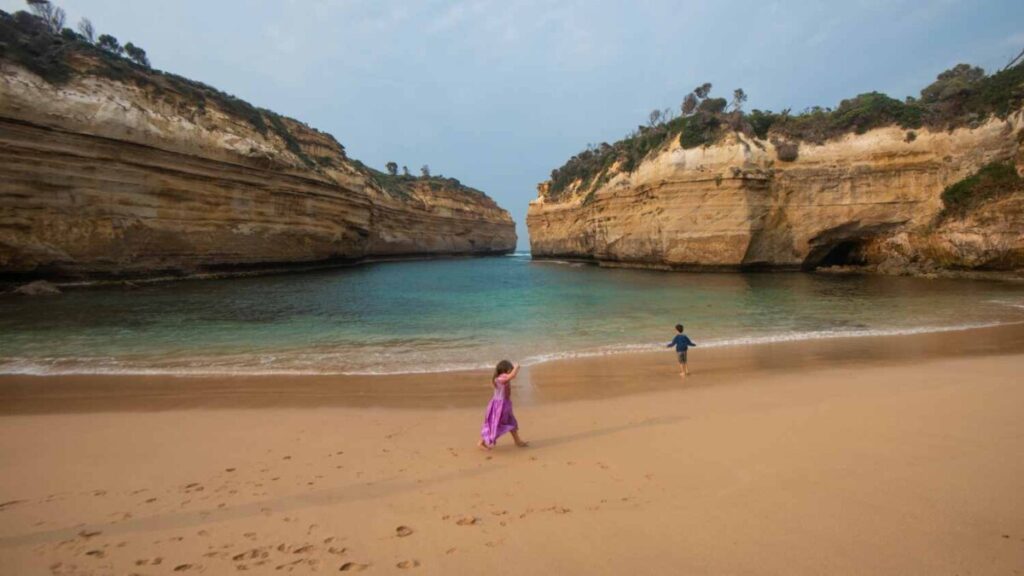
The 12 Apostles aren’t the only dramatic natural features along this road. Less than 10 minutes drive further on from the Apostles is Loch Ard Gorge and the Razorback. Loch Ard Gorge is particularly worthy of a visit, as you can descend down steps into the gorge for a different viewpoint. It’s also a great break for the kids as there is plenty of sand to play in down here.
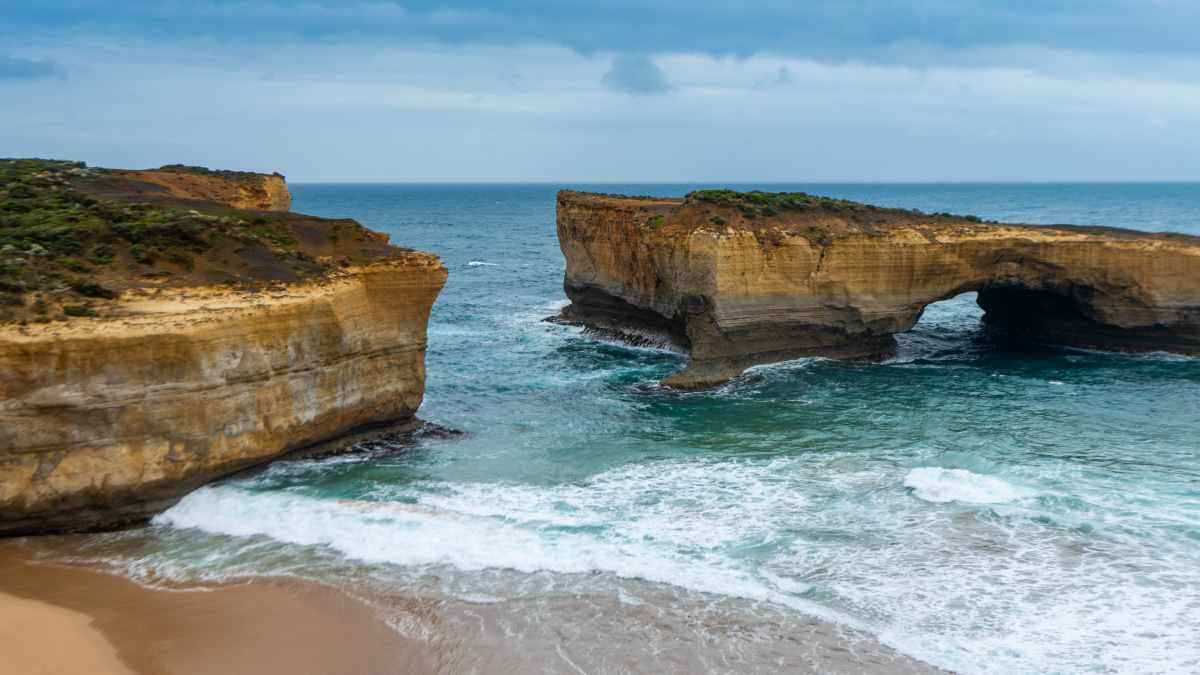
You will pass through the completely charming town of Port Campbell (I’d love to spend a week here) before reaching the London Bridge, which made headlines in January of 1990 when part of the bridge collapsed, leaving visitors stranded, although uninjured, and needing to be rescued by helicopter.
There is so much more
There is so much more to see and do on the Great Ocean Road, from hiking, small-town charm, nature, wildlife and ziplining through the trees at Otway Fly.
Don’t let it be 30 years between visits as I did.
Best time to drive the Great Ocean Road
The Great Ocean Road can be driven year-round, but each season offers a slightly different experience.
Summer (December – February)
Summer brings warm weather, long days and great beach conditions. It’s also the busiest time of year, particularly during Victorian school holidays, so accommodation should be booked well in advance.
Autumn (March – May)
Autumn is often considered one of the best times to drive the Great Ocean Road. The weather is still pleasant, crowds are smaller and the coastal scenery can be particularly beautiful in the softer light.
Winter (June – August)
Winter can be wild and dramatic along the coast, with powerful Southern Ocean swells crashing against the cliffs. Whale watching season also begins during winter, with southern right whales often spotted along this stretch of coastline.
Spring (September – November)
Spring brings wildflowers, milder weather and fewer crowds. It’s a fantastic time for hiking and exploring the national parks along the route.
How long should you spend on the Great Ocean Road?
While the Great Ocean Road drive can technically be completed in a single day, doing so means missing many of the stops that make the journey so memorable.
Most travellers choose to spend two to three days exploring the coastline, allowing time to visit places like Lorne, Apollo Bay, the Cape Otway Lightstation and the Twelve Apostles.
If you enjoy slow travel or plan to include hiking, wildlife spotting or camping along the way, spending five to seven days on the Great Ocean Road can turn the trip into a much more relaxed experience.
On our visit, we spent a full week exploring, which allowed us to stop frequently and enjoy the beaches, cafes and coastal towns along the route.
Tips for driving the Great Ocean Road with kids
The Great Ocean Road is an excellent family road trip, but a little planning can make the journey much easier with children in the car.
Take your time
There are plenty of opportunities to stop along the way. Beaches, lookouts and short walks help break up the drive and give kids a chance to stretch their legs.
Start early at popular sights
Locations like the Twelve Apostles can become busy later in the day, particularly during school holidays. Arriving early in the morning makes the experience far more enjoyable.
Pack snacks and drinks
Although there are plenty of charming towns along the route, the distances between them can be longer than expected.
Look out for wildlife
Koalas are often spotted in the trees around Cape Otway National Park, while kangaroos and birds are common throughout the region.
Getting there, staying and getting around
Your Great Ocean Road drive begins in Torquay, a one-hour and 20-minute drive south of Melbourne. If flying into Melbourne, car hire can be pre-booked to pick up at the airport. Many families choose to drive themselves and either camp or stay in a range of accommodation along the way. During peak season, you will need to pre-book accommodation.
It’s worth noting that there are a number of HipCamps located not far inland along the Great Ocean Road.
- Visit Park Booker to book your caravan site or cabin along the Great Ocean Road
- Visit Booking.com to book your hotel stay along the Great Ocean Road
- Visit StarRV to book an RV for your Great Ocean Road drive
- Visit Discover Cars to get a great deal on car hire
FAQ: Great Ocean Road drive
The Great Ocean Road drive is around 243 kilometres long. While it can technically be driven in a single day, most travellers spend at least two to three days exploring the beaches, towns and natural attractions along the way.
The Great Ocean Road begins in Torquay, about 90 minutes south of Melbourne, and finishes in Allansford near Warrnambool.
Yes, the Great Ocean Road is a fantastic family road trip. Kids will enjoy beaches, wildlife spotting, short walks, ice-cream stops and iconic attractions like the Twelve Apostles.
Some of the highlights include Bells Beach, Lorne, Apollo Bay, Cape Otway Lightstation, Loch Ard Gorge and the famous Twelve Apostles.
This article contains affiliate links to products. We may receive a commission for purchases made through these links.
Where to next?
📌 Save this article to Pinterest so you’ll have it handy when planning your own trip.

Let me know what you think!