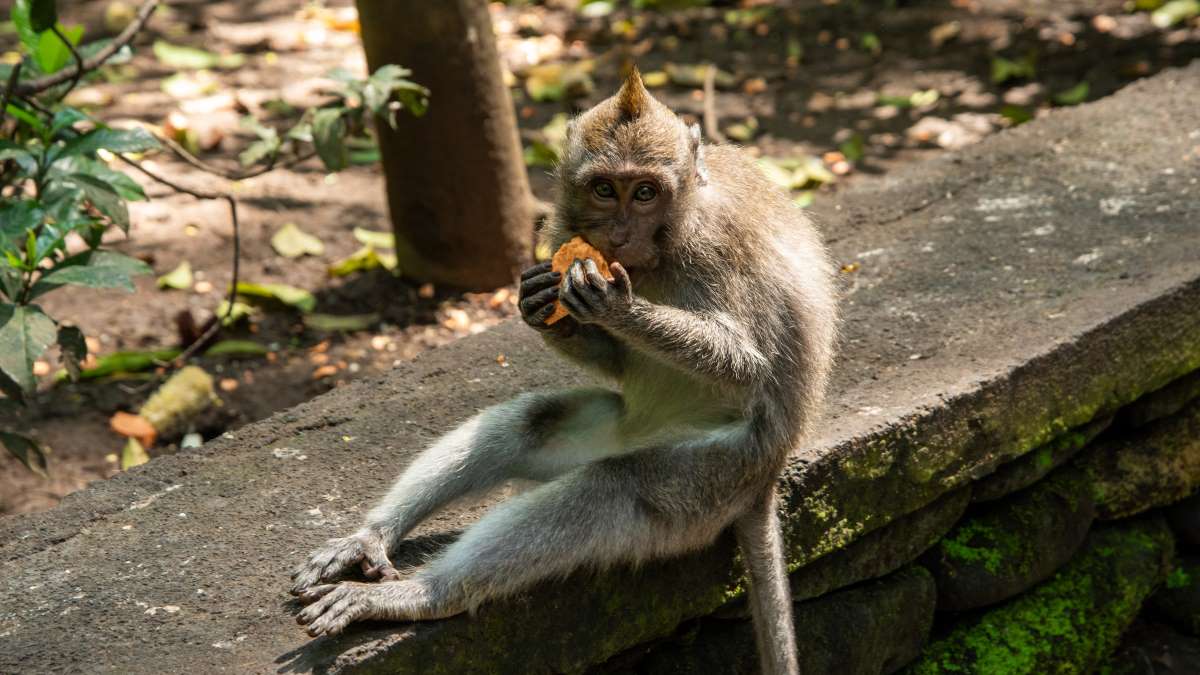
If you’re planning a family holiday in Bali, chances are you’ve heard about the famous Ubud Monkey Forest. Home to more than 1,000 long-tailed macaques, ancient temples and a surprisingly beautiful patch of jungle right in the middle of Ubud, it’s one of the town’s best-known attractions.
We visited Ubud Monkey Forest with our kids almost on a whim.

We had arrived in Ubud two days before the start of our Intrepid Bali Family Tour and discovered that the Monkey Forest was within walking distance of our hotel, Meruhdani Boutique Hotel. With nothing else planned, we decided to wander down and take a look.
I have to admit, my confidence took a slight hit when we passed a pharmacy advertising “rabies shots here” as we walked towards the Monkey Forest. Not exactly the reassuring welcome you’re hoping for when you’re about to voluntarily surround yourself with hundreds of monkeys!
Thankfully, what we found when we arrived was nothing like the chaotic tourist attraction I had pictured. The entrance was professional and well organised, the forest itself was absolutely beautiful and, despite the steady stream of taxis and minibuses dropping visitors off, it didn’t feel particularly overcrowded.
Here’s what it’s actually like visiting Ubud Monkey Forest with kids and what I’d want to know before going.
What is Ubud Monkey Forest?
Officially called the Sacred Monkey Forest Sanctuary, Ubud Monkey Forest is a 12.5-hectare forest sanctuary in the village of Padangtegal in Ubud. It is home to more than 1,000 Balinese long-tailed macaques (Macaca fascicularis), which live in different social groups throughout the forest.
But it’s important to know that this isn’t simply a place where tourists go to see monkeys. The forest is an important spiritual, conservation and community site for the people of Padangtegal. There are three temples within the sanctuary, along with sacred statues, huge trees, bridges and forest paths.
Its management is based around the Balinese philosophy of Tri Hita Karana, which focuses on harmony between people, nature and the spiritual world. So while the monkeys are undoubtedly the stars of the show for most visitors, the forest itself is a big part of the experience.
Our experience visiting Ubud Monkey Forest with kids
Arriving at Ubud Monkey Forest
We didn’t pre-book our tickets and instead, simply walked to the Monkey Forest and bought them when we arrived. However, if you want to visit with a private driver who will take photos for you, you can book that via Viator.
The entrance area was much more polished than I was expecting. There are cafes, lovely Balinese-style buildings and even a deck overlooking water filled with fish. From here, you pass through into the actual forest and its network of walking paths.
And you don’t have to walk very far before you meet the residents.
Meeting the monkeys
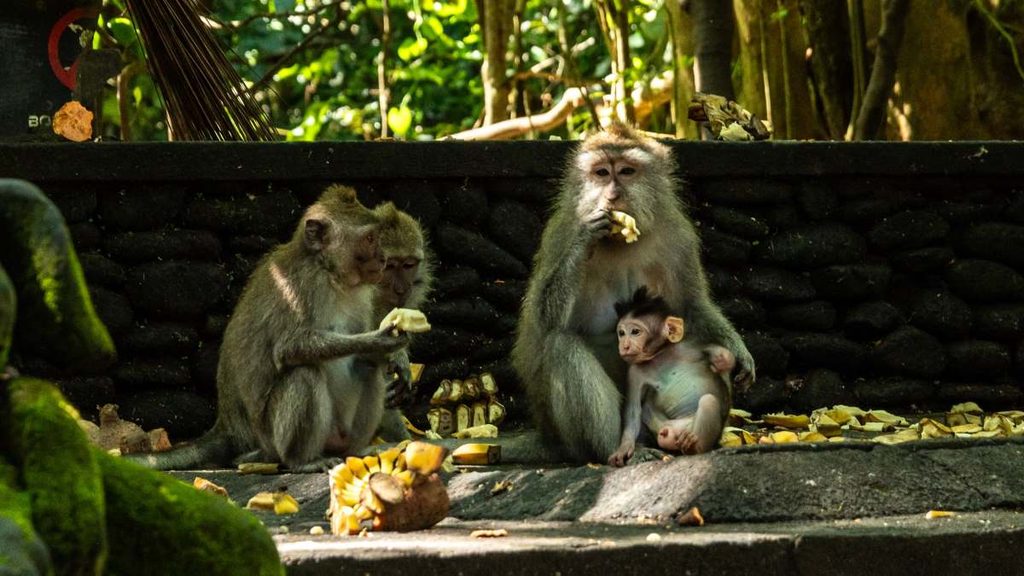
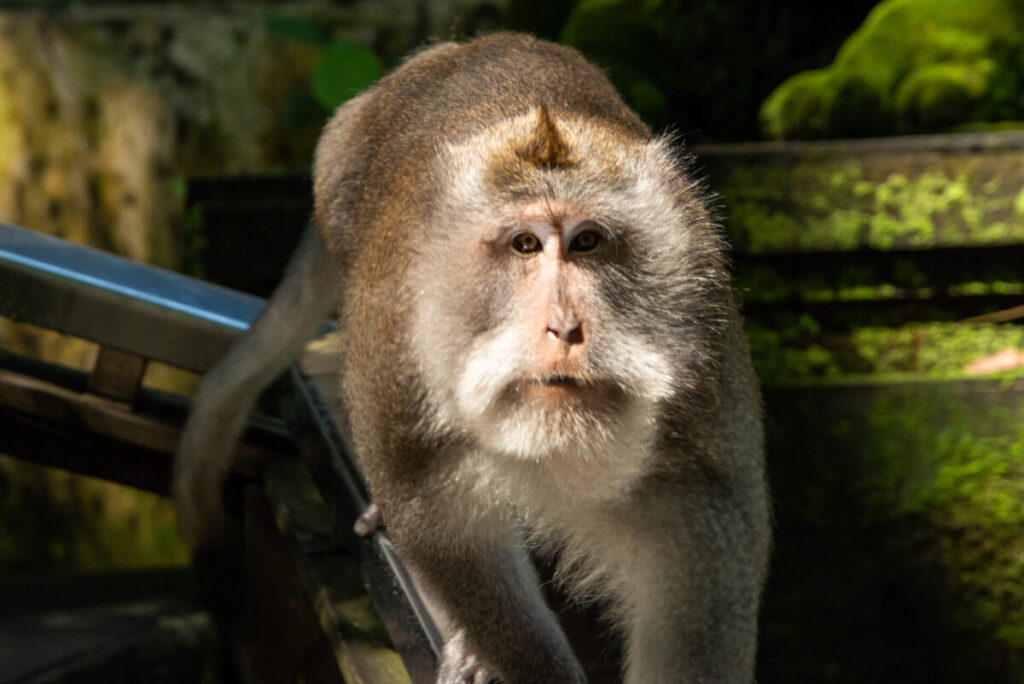
We spotted our first monkeys within about a minute. They’re everywhere. We saw them running along the handrails beside the paths, sitting on the ground, climbing through the trees and congregating around feeding areas. Staff feed the monkeys regularly, so there are plenty of opportunities to simply stop and watch them interacting.
One of the most important rules at the Monkey Forest is to avoid direct eye contact because the macaques can interpret it as aggression. Of course, guess who forgot? I was trying to take a photo of one when I accidentally made direct eye contact. It immediately bared its teeth and hissed at me.
I quickly looked at the ground and, just like that, scary monkey disappeared and cute monkey returned. It went straight back to calmly preening itself as though nothing had happened. It was a pretty effective reminder that, despite how accustomed they are to people, these are still wild animals.
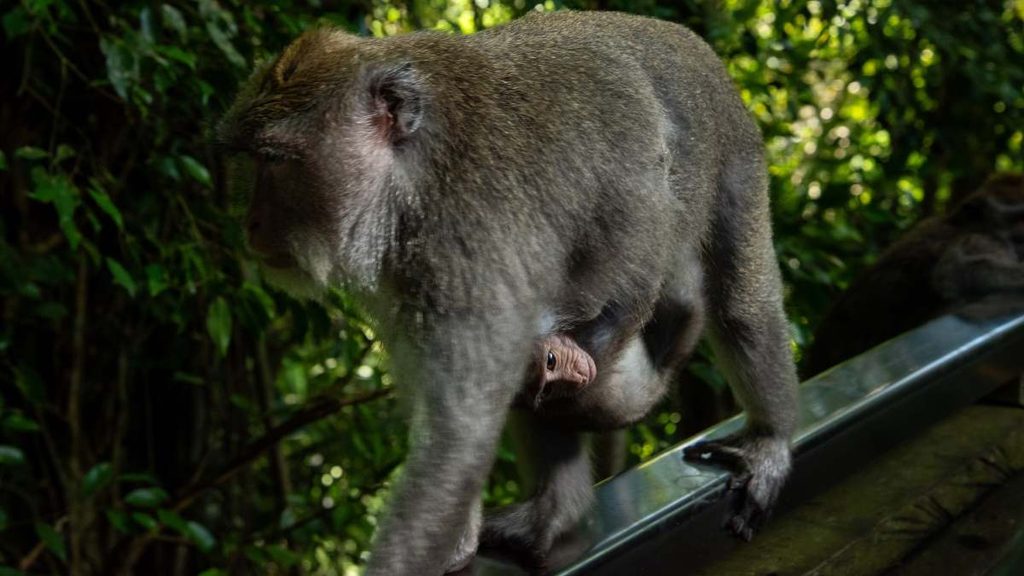
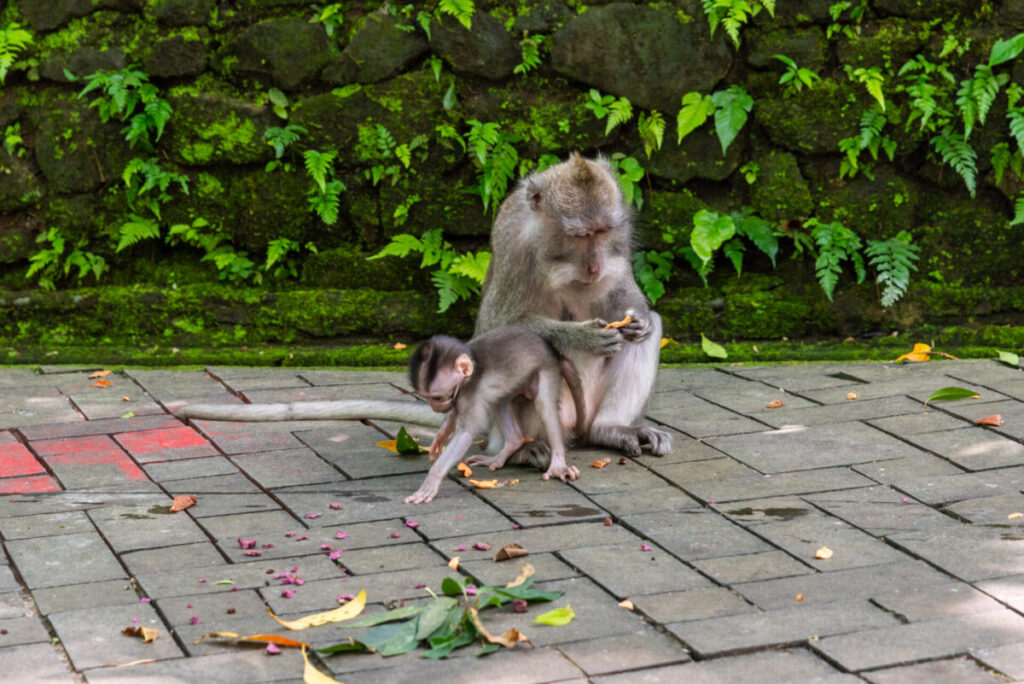
And then there are the babies. Honestly, it’s difficult not to completely melt when you see the tiny baby monkeys clinging to their mothers. Watching the macaques interact with each other was one of my favourite parts of the visit.
Walking through the forest
What surprised me most was how beautiful Ubud Monkey Forest is. Even if you removed the monkeys entirely, I’d still think the forest was worth walking through. There are dangling vines, enormous trees, moss-covered Balinese statues, temples, bridges and lush jungle greenery everywhere you look.
One of the most photographed spots is the Dragon Bridge, but honestly, the entire sanctuary is incredibly photogenic.
There are also three temples within the forest: Pura Dalem Agung Padangtegal, the Holy Spring Temple and Pura Prajapati, or the Cremation Temple. These are sacred places rather than tourist exhibits, and some areas cannot be entered by visitors, so make sure you pay attention to signs and respect restricted areas.
When a monkey tried to check my husband’s hands
One of our funniest moments happened when a group of monkeys was trotting along the fence rail beside us. My husband, Jason, was standing there watching them with his hands loosely clasped together.
One monkey stopped directly in front of him. It looked at his hands and apparently decided there must be something interesting hidden inside them, because it reached out its little hand and tried to grab Jason’s.
Jason looked down, got a fright and snatched his hand away while the rest of us burst our laughing.
The monkey, presumably disappointed to discover there was absolutely nothing worth stealing, simply continued on its way. It was funny, but it also demonstrated just how curious these monkeys are and why the sanctuary warns visitors to be careful with food and small objects.
What are the monkeys actually like?
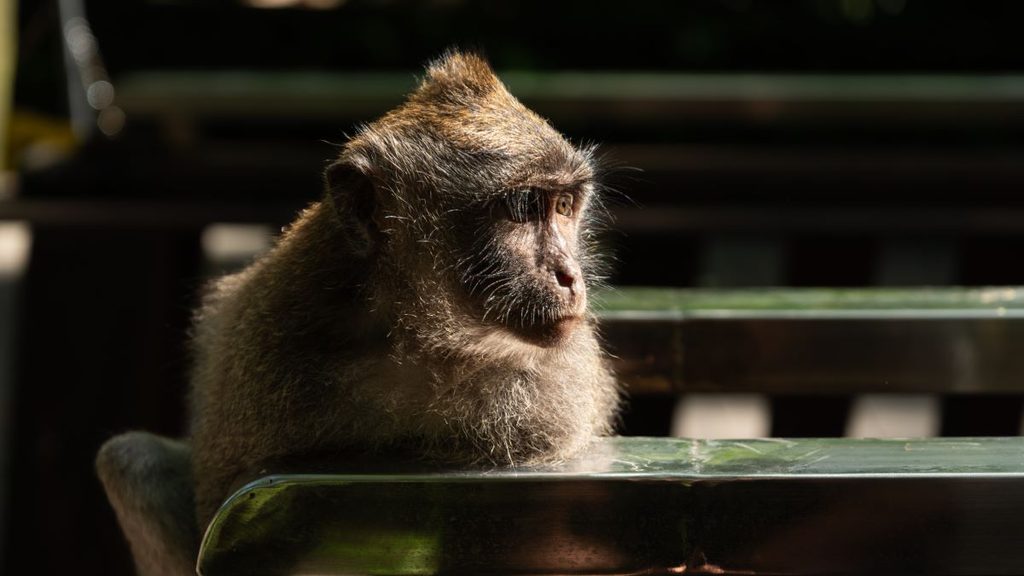
Beautiful, fascinating and still very much wild animals. The monkeys we saw appeared healthy and active, and there were plenty of opportunities to watch their natural social behaviour. They’re accustomed to people walking through their environment, but that doesn’t make them pets. You need to give them space and allow them to decide how close they want to come to you.
For me, watching the mothers with their babies and seeing the monkeys interact with each other was the highlight.
Is Ubud Monkey Forest safe with kids?
I felt comfortable visiting Ubud Monkey Forest with our kids, who were 11 and 13 at the time, but there are definitely rules you need to follow. The monkeys are wild animals and can bite and scratch if they feel threatened or if visitors try to touch or play with them.
For younger children, I’d think carefully about whether your child can stay calm and follow instructions. If you have a little “wild child” who is likely to run towards a monkey, chase one, grab at it or become frightened and run away if one approaches, I’d probably wait until they’re older.
On the other hand, if your children understand that they need to quietly observe the monkeys rather than interact with them, I wouldn’t be concerned. There were plenty of families with younger children visiting when we were there.
The main rules to remember are:
- Don’t touch or pick up the monkeys.
- Keep a respectful distance.
- Don’t feed the monkeys unless participating in an activity supervised by trained staff.
- Avoid direct eye contact.
- If a monkey jumps on you, don’t panic or run. Stay calm and slowly walk away.
- Don’t take food or drinks into the forest.
- Keep jewellery, toys and other small objects secured.
- Keep children close and supervise them around the monkeys.
- Respect restricted and sacred areas.
Staff are stationed throughout the sanctuary and can assist if you have any problems.
What NOT to take into Ubud Monkey Forest
Food is probably the biggest one. You’re not allowed to bring food or drinks into the forest because the monkeys may try to grab them. Eat before you enter rather than carrying snacks around with you. There is a cafe around the entrance area, so it’s easy enough to grab something before or after your visit.
I’d also avoid having small loose objects easily accessible. The sanctuary specifically warns about things such as jewellery, beads and toys that might attract the monkeys. Plastic bags aren’t permitted either.
Your phone or camera is obviously worth bringing (you’ll want it) but keep hold of it and don’t deliberately wave belongings around near the monkeys.
How long do you need at Ubud Monkey Forest?
I’d allow around one to two hours. That gives you enough time for a leisurely walk through the forest, plenty of stops to watch the monkeys and time to admire the temples, statues and scenery without rushing.
You could spend longer if you’re particularly interested in photography or simply enjoy watching the macaques.
Ubud Monkey Forest tickets and opening hours
At the time of writing, Ubud Monkey Forest is open daily from 9 am until 6 pm, with the last entrance at 5 pm.
Current entrance prices are:
| Ticket | Price |
|---|---|
| Adult | IDR 130,000 |
| Child | IDR 100,000 |
We bought our tickets at the entrance without pre-booking, although tickets can also be booked online. Prices and opening hours can change, so check the official Ubud Monkey Forest website before visiting.
What age is Ubud Monkey Forest best for?
There isn’t a particular age children need to be to visit, and we saw families with children of different ages. Personally, I think around seven and older would make for a more relaxing visit. It’s not because younger children won’t enjoy seeing the monkeys. It’s simply easier when your child is old enough to understand that they can’t run towards them, touch them, stare into their eyes or try to feed them.
Our kids were 11 and 13 and we had no issues at all. That said, Ubud Monkey Forest isn’t exclusively a family attraction. I’d happily visit without children too. The combination of wildlife, Balinese culture and the forest itself makes it interesting regardless of your age.
Tips for visiting Ubud Monkey Forest with kids
- Eat before you enter. You can’t take food or drinks into the forest, so don’t arrive with hungry kids and a backpack full of snacks.
- Use mosquito repellent. Once you’re inside, you’re walking through lush tropical forest.
- Explain the monkey rules before entering. It’s much easier to have the conversation with younger kids beforehand rather than waiting until they’re standing a metre away from a macaque.
- Keep younger children close. Don’t let them run ahead or chase the monkeys.
- Secure loose belongings. Don’t make yourself more interesting to a curious monkey than you need to be.
- Bring your camera. The monkeys are obviously photogenic, but so is the forest itself.
- Don’t rush. Part of the fun is simply stopping and watching the monkeys interact.
Would we visit Ubud Monkey Forest again?
Probably not… but only because I feel like we experienced it properly the first time. It’s not the kind of attraction I’d personally need to visit every time I returned to Ubud. But would I recommend visiting at least once? Absolutely.
I went in expecting the monkeys to be the entire attraction and came away just as impressed by the forest itself. It’s lush, atmospheric and unmistakably Balinese, with beautiful temples, statues and jungle scenery around almost every corner. The monkeys, of course, make it memorable.
As long as your kids are capable of following the rules and treating the macaques with respect, Ubud Monkey Forest is an easy addition to a family stay in Ubud and one I’d happily recommend.
Ubud Monkey Forest FAQs
The long-tailed macaques live in what the sanctuary describes as a semi-wild environment. They are accustomed to people but they are not domesticated animals, so visitors need to respect their space and follow the sanctuary’s guidelines.
They can. According to the sanctuary, bites sometimes occur when visitors touch or play with the monkeys. There is a first aid clinic within Ubud Monkey Forest if an incident occurs.
Visitors aren’t allowed to independently feed the monkeys. Sanctuary staff feed them throughout the day, and any visitor interaction or feeding should only take place under staff supervision.
Yes, it’s possible. If one does, the sanctuary advises visitors not to panic or run. Stay calm, stand up and slowly walk away, and ask a staff member for assistance if needed.
Yes. Just maintain a sensible distance and remember not to stare directly into their eyes while trying to get your perfect shot – a lesson I learned firsthand!
Yes. There are three temples within the sanctuary: the Main Temple (Pura Dalem Agung Padangtegal), the Holy Spring Temple and Pura Prajapati. These are sacred sites and some areas are restricted to worshippers, so visitors should follow signage and observe the temples respectfully.
We didn’t. We simply arrived and bought our tickets at the entrance. Online booking is available, however, so it’s worth checking the official website before your visit, particularly during busy travel periods.
Ubud Monkey Forest is in Padangtegal in central Ubud. Depending on where you’re staying, you may be able to walk there as we did. Otherwise, it’s one of Ubud’s major attractions and easy to reach by taxi or private driver.
This article contains affiliate links to products. We may receive a commission for purchases made through these links.
Read next:
📌 Save this article to Pinterest so you’ll have it handy when planning your own trip.
Let me know what you think!