Updated 1st November 2026.
An old gold rush town, Aboriginal rock art, gorge walks and campsites tucked among red cliffs – there’s plenty to pull you east of Alice Springs. The East MacDonnell Ranges make a great family road trip, whether you’re heading out for the day or packing the camping gear for a longer adventure.

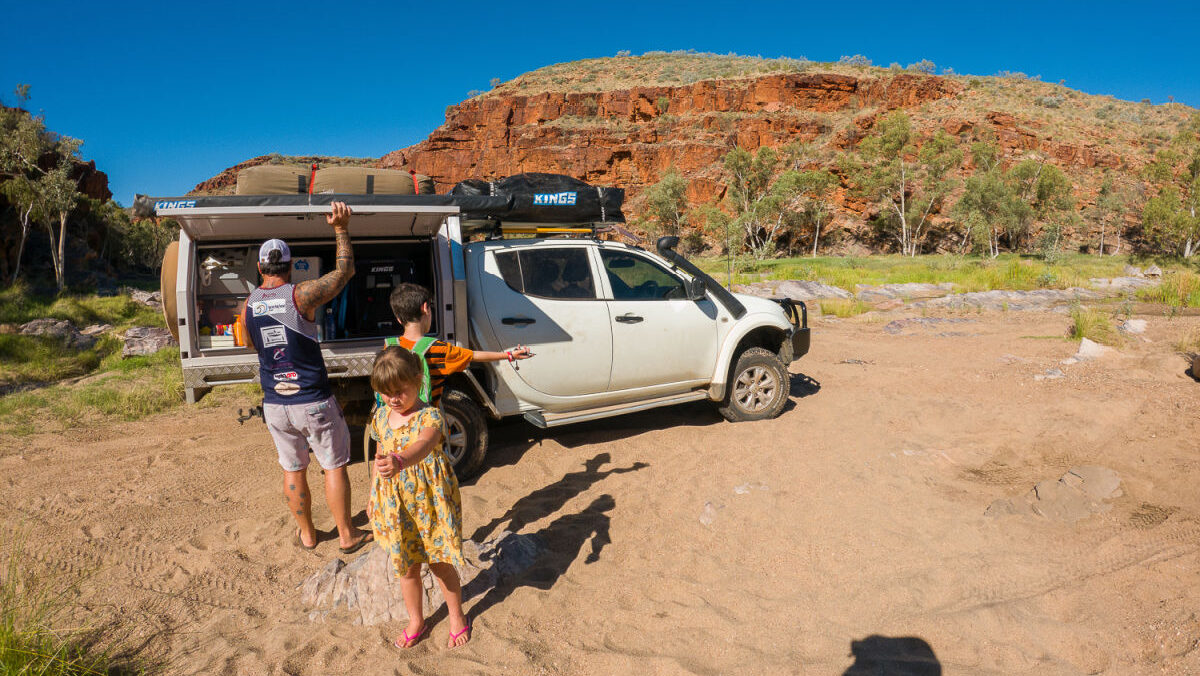
We explored the East Macs with our kids, stopping at historic ruins, wandering through gorges and taking the slow, bumpy drive into Ruby Gap. That last stop was a particular favourite, although it’s somewhere you need the right vehicle, plenty of supplies and time up your sleeve.
You don’t need to tackle the remote tracks to enjoy the region, though. This guide covers the stops we visited, where to camp or stay, and the practical details to help you plan an East MacDonnell Ranges trip that suits your family.
In This Guide…
Planning your East MacDonnell Ranges trip
Where are the East MacDonnell Ranges?
The East MacDonnell Ranges stretch roughly 150km east of Alice Springs in Central Australia. Known as the East Macs (not to be confused with the West Macs), they’re home to rugged gorges, culturally significant Aboriginal sites and the remains of an outback gold rush.
From Alice Springs, head out along the Ross Highway. Some attractions are easy stops close to the highway, while others involve detouring onto unsealed roads or tackling a proper 4WD track. It’s worth plotting your stops before leaving town, particularly if you’re planning to venture beyond the main sightseeing spots.
When is the best time to visit?
The cooler months from April to September are the best time to explore the East MacDonnell Ranges, especially if walking and camping are on your list. You’ll still need drinking water, sun protection and an early start for longer walks, but exploring is much more comfortable than during the hotter months.
Summer temperatures can exceed 40°C, making a family hike a much more serious undertaking. Rain can also affect access, so check road conditions and park alerts before heading out, whatever time of year you visit.
Do you need a 4WD?
You can enjoy parts of the East MacDonnell Ranges without a 4WD, but your vehicle will determine how far you can explore.
Emily Gap, Jessie Gap and Corroboree Rock make straightforward stops along the sealed Ross Highway. The main Trephina Gorge area is generally accessible by 2WD in good conditions, although the final 5km is unsealed. John Hayes Rockhole, within the same park, requires a high-clearance 4WD.
Arltunga involves a longer gravel-road detour, with the final 33km unsealed. Check current conditions before deciding whether it suits your vehicle. N’Dhala Gorge requires a 4WD, while Ruby Gap calls for a high-clearance 4WD and confidence driving through sandy and rocky terrain. An AWD shouldn’t automatically be treated as a substitute.
If you’re hiring a vehicle, check that your rental agreement allows travel on your planned roads and tracks. Being able to drive there and being covered to drive there are two separate things.
How long do you need?
For a first visit, I’d allow two or three days. That gives you time to enjoy a few walks, explore the historic sites and spend a night or two without constantly packing everyone back into the car.
If you only have one day, choose a handful of stops along the Ross Highway, such as Emily and Jessie Gaps, Corroboree Rock and Trephina Gorge. You won’t see everything, but you can still have a lovely day out from Alice Springs.
Allow extra time if Ruby Gap is on your list once access reopens. NT Parks recommends at least a full day for Ruby Gap alone, or two days if you want to walk or include Arltunga. On our visit, the drive from Arltunga to Ruby Gap took around two hours due to track conditions – much longer than the mapping estimate suggested. This is somewhere to give yourself breathing room.
Access update: As checked on 1 November 2026, Ruby Gap Nature Park is closed because flooding has made access impassable. Check the NT Parks website for the latest status before including it in your plans.
Things to do in the East MacDonnell Ranges
From short walks close to Alice Springs to remote camping adventures, there’s plenty to explore in the East Macs. These stops give you a mix of Aboriginal culture, gold rush history and the scenery that makes a Central Australian road trip so memorable.
Emily and Jessie Gaps
Emily and Jessie Gaps make a lovely first stop along the Ross Highway. Part of Yeperenye / Emily and Jessie Gaps Nature Park, these sacred places introduce visitors to the significance of the landscape to the Central Arrernte people.
At Emily Gap, a short walk from the car park brings you to rock paintings associated with the caterpillar Dreaming story. Jessie Gap is a little further along the highway, with another short walk into the gap and a picnic area where you can stop for a snack. There’s a toilet at Jessie Gap, but none at Emily Gap.
We all found the paintings fascinating, although you won’t see photographs of them here. Traditional Owners ask visitors not to touch or photograph the rock art, or climb the rocks in and around the gaps. Take your time, read the signs and enjoy these places respectfully.
Corroboree Rock
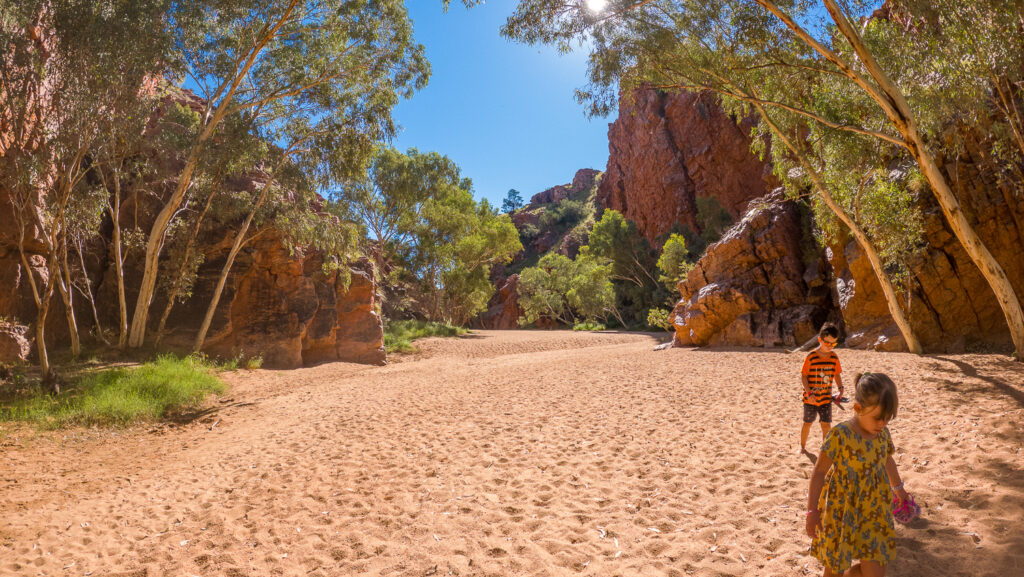
Around 50km east of Alice Springs, Corroboree Rock is a striking dolomite outcrop and an important sacred site for Arrernte people.
Follow the short walking track around its base to see the formation from different angles and read the interpretive signs along the way. It’s an interesting place to stretch your legs between drives, without committing everyone to a long hike. Stay on the marked track and leave the rock itself unclimbed.
Trephina Gorge and John Hayes Rockhole
Trephina Gorge is somewhere I’d leave time for rather than squeeze into a quick roadside stop. There are gorge walls, sandy creek beds and walking options for different energy levels. The park is around 85km east of Alice Springs, with the final 5km into Trephina Gorge on an unsealed road. The main gorge area is generally accessible by 2WD in good conditions, but check before heading out, particularly after rain.
For a shorter outing, the Trephina Gorge Stroll is 500 metres return, with an estimated walking time of 20 minutes. It’s a good starting point if the kids aren’t keen on a bigger hike. Check the NT Parks walking information for longer options.
John Hayes Rockhole is a separate part of the park, reached by high-clearance 4WD. Swimming is possible when there’s water, but the waterhole can dry up and is very cold even in summer. Experienced walkers can also reach it via the Trephina Ridgetop Trail.
Camping is available within the park, but book and pay online before arriving. Facilities and vehicle restrictions vary between campgrounds, so check your chosen site rather than assuming they’re all the same.
N’Dhala Gorge
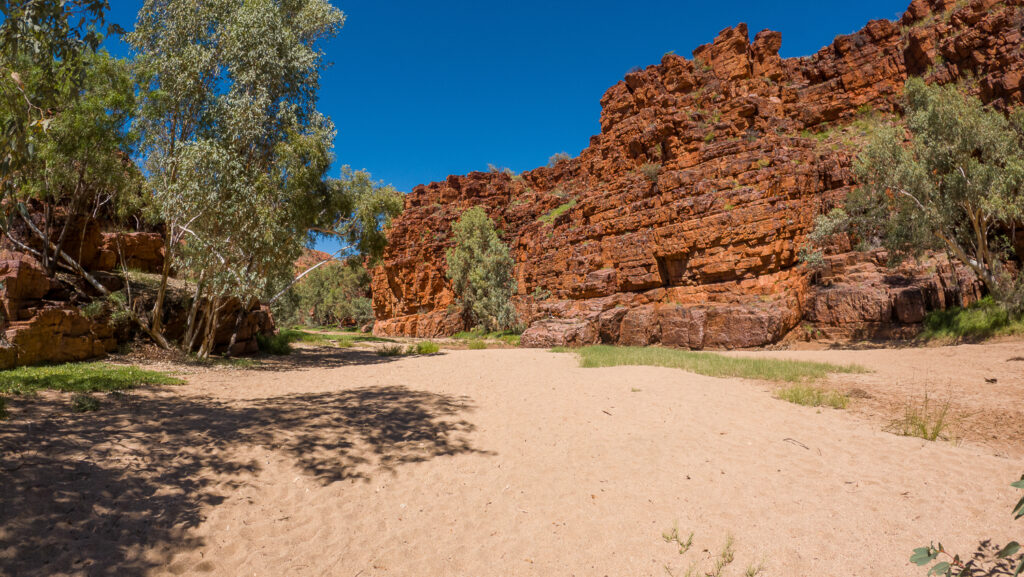
N’Dhala Gorge is worth considering if you have a 4WD and want to explore more of the region’s Aboriginal cultural heritage. NT Parks records around 6,000 individual rock carvings, also known as petroglyphs, throughout the park. The turn-off is around 90km east of Alice Springs, followed by an 11km 4WD track. On our visit, sandy creek beds and water crossings made getting there part of the adventure, although conditions will depend on recent weather.
Once you arrive, a 1.5km return walk, taking around an hour, leads through the gorge. Allow time to appreciate the engravings and their setting, while respecting the Arrernte people’s request to protect the park and its cultural sites.
There’s a small bush camping area with toilets, picnic tables and fire pits. Bring your own water and supplies, book camping online before you arrive and remember that firewood collection is prohibited within the park.
Arltunga Historical Reserve
Arltunga is one of those places where history becomes much more interesting once you’re standing among it. Established following a gold rush in 1887, it’s officially recognised as Central Australia’s first town.
Around 110km east of Alice Springs, the reserve is reached via a route that includes 33km of unsealed road. Start at the visitor centre before exploring as understanding who lived here and how they extracted the gold makes the buildings and machinery much more meaningful.
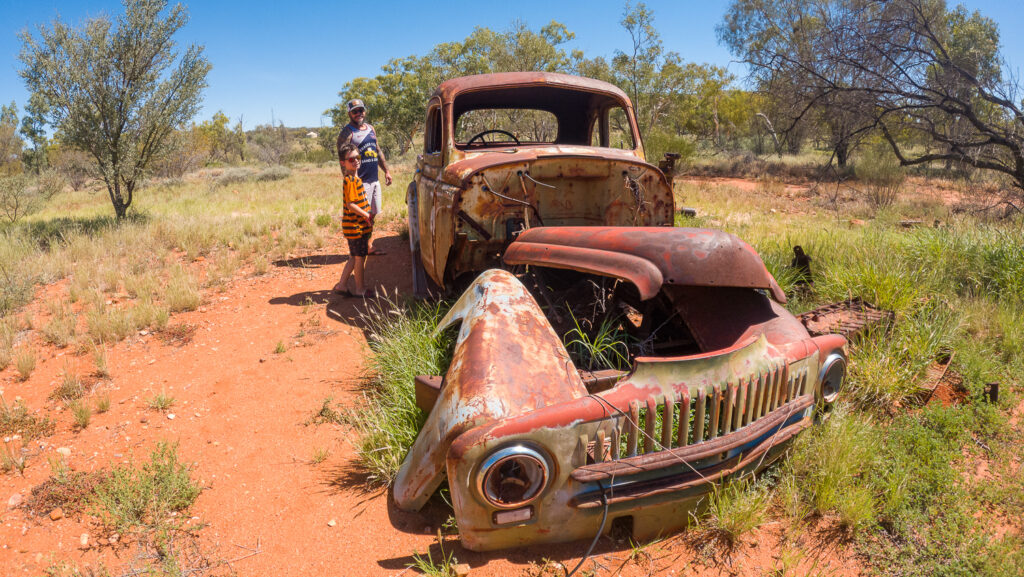
We enjoyed wandering among the ruins and old mining equipment. The restored police station and remains of the government works give you plenty to look at, while the walking routes let you choose how much exploring your family wants to do. Keep children close around the mining sites, particularly where there are vertical shafts, and follow signs about where you can safely walk. Exploring the goldfield doesn’t mean entering every opening you come across.
And if all that gold rush history has you wondering about fossicking, it’s prohibited inside the historical reserve. A separate adjoining fossicking reserve has its own access and permit requirements, so check those before planning a dig.
Ruby Gap Nature Park
Access update: As checked on 1 November 2026, Ruby Gap Nature Park is closed because flooding has made access impassable. Check the NT Parks website for the latest status before planning a visit.
Ruby Gap was the highlight of our East MacDonnell Ranges trip. High gorge walls, a sandy river bed and the little red garnets we spotted made it a memorable place to camp. I’m a sucker for a campsite with a gemstone connection. Those garnets have a story, too. In the late 1800s, stones found here were mistaken for rubies, sparking a mining rush before their true identity became clear.
Getting there was an adventure in itself. The drive from Arltunga took us around two hours, much longer than the mapping estimate suggested, and the track was rough when we visited.
When access is open, you need a high-clearance 4WD, suitable preparation and experience with sandy and rocky tracks. Stick to designated vehicle routes and obey signs marking where driving ends. Walking further towards Glen Annie Gorge is an option for experienced, prepared walkers, but we didn’t make it that far on our visit.
Camping here means being self-sufficient, with your own water, food, cooking equipment and toilet arrangements. Book and pay online before arriving once the park reopens. The Hale River can flood after heavy rain, so weather conditions are an essential part of planning this trip.

East MacDonnell Ranges camping and accommodation
Whether you’re after a bush campsite or a bed with a roof overhead, there are a few ways to stay in the East MacDonnell Ranges.
Nature Park camping
Camping puts you close to the walks and scenery, but facilities vary considerably. These are bush camping options, so arrive with your food, drinking water and everything you need for your stay.
Trephina Gorge has several campgrounds. Trephina Gorge, Bluff and Panorama campgrounds have 2WD access in suitable conditions, while John Hayes Rockhole requires a high-clearance 4WD. If you’re bringing a caravan or motorhome, choose Panorama Campground; caravans and motorhomes aren’t permitted at the other three. Check individual site details when booking.
N’Dhala Gorge Nature Park offers a small bush campground with toilets, picnic tables and fire pits. Access is by 4WD, and you’ll need to bring your own water and supplies. Camper trailers are allowed, but caravans and motorhomes aren’t.
Ruby Gap Nature Park is the most remote option here, with bush camping and no toilets or showers. You need a high-clearance 4WD and must be self-sufficient, including bringing your own toilet arrangements. Camper trailers are permitted, but caravans and motorhomes aren’t. As checked on 1 November 2026, the park is closed because flooding has made access impassable. Check its status before planning a stay.
Book and pay for these campsites through the NT Parks booking system before heading out – you can’t pay at the campground. Visitors to the Territory also need an NT Parks Visitor Pass for these parks, which is separate from the camping booking.
Ross River Resort
Around 85km east of Alice Springs, Ross River Resort has plenty of outback character. Built around the historic Loves Creek Homestead, dating to 1898, it’s a beautiful setting among the ranges.
However, its booking arrangements have changed since our visit. Ross River Resort now operates exclusively for group bookings, including school camps, retreats, functions and events. Its facilities include cabins, bunkhouse accommodation, camping grounds and a pool, but it’s no longer somewhere to assume you can book an ordinary family camping stay.
If you’re organising a larger gathering, contact Ross River Resort directly to discuss the options.
Hale River Homestead
Hale River Homestead at Old Ambalindum is a station stay on the Binns Track, with wide-open spaces and plenty of character. It’s somewhere to slow down for a while, particularly if you’ve been moving between campsites.
Accommodation includes camping and a selection of self-contained stays, including The Cottage and The Bunkhouse. The grassed camping area has hot showers and fire pits – a welcome combination after a few dusty days on the road.
The café was a highlight of our visit. Set in the old shed known as The Workshop, it has the kind of atmosphere that makes you want to linger over your meal. The homestead currently advertises meals, snacks, cakes and drinks here; check opening hours and meal availability before making a special trip.
If you’re continuing towards Gemtree, it can make a lovely stop along the way.
Extending your trip to Gemtree
Gemtree sits on the Plenty Highway, north of the East MacDonnell Ranges, and makes a fun extension if your family enjoys fossicking. You can continue through from the East Macs or reach it from Alice Springs via the Stuart and Plenty highways. Gemtree is on the sealed section of the Plenty Highway, so you don’t need to tackle the Binns Track to visit.
There are powered and unpowered campsites, along with cabin and room accommodation for those travelling without camping gear. Facilities include showers, toilets, laundry, a swimming pool, fuel and a country store selling takeaway meals and basic supplies. Book ahead rather than relying on finding a space when you arrive.
We really enjoyed staying here and I can recommend the burgers from our visit!
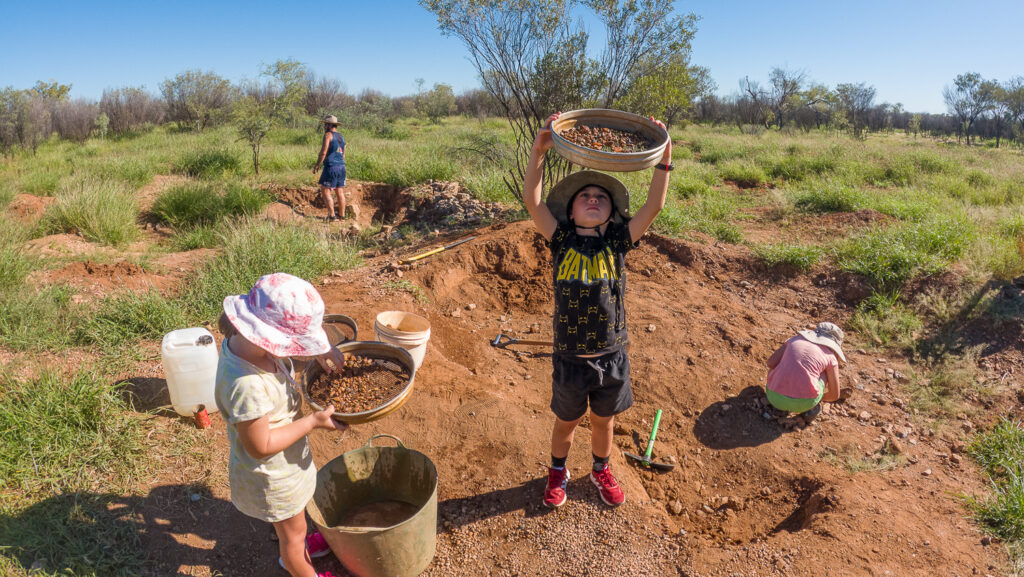
The big drawcard, though, is the tag-along fossicking tours. Choose between garnets and zircons, with equipment supplied so you can have a go without bringing your own digging setup. Check tour availability when booking your stay.
Having tried both, I found the garnet fossicking less labour-intensive. That would be my pick if you’re deciding between the two and don’t fancy quite as much digging. Either way, leave yourself time for it rather than squeezing a tour between long drives.
Suggested East MacDonnell Ranges itineraries
You don’t need to visit every gorge and historic site to enjoy the East Macs. Pick a route that suits your vehicle, leave time for exploring and resist the temptation to squeeze too much into each day.
One day from Alice Springs
For a manageable day trip, stick to Emily and Jessie Gaps, Corroboree Rock and Trephina Gorge. Leave Alice Springs early and stop at Emily Gap, followed by Jessie Gap. Continue to Corroboree Rock for a walk around its base, then make Trephina Gorge your main stop for a picnic and a walk before returning to Alice Springs.
This gives you a taste of the region without tackling the more remote tracks. Choose your Trephina walk according to the weather and everyone’s enthusiasm – there’s no need to attempt a longer hike just because you’ve packed the walking shoes.
The final approach to Trephina Gorge is unsealed, so check road conditions and any rental vehicle restrictions before setting off.
Two or three days with an overnight stay
With two days, you can slow things down and give both the scenery and history some attention.
Day one: Visit Emily and Jessie Gaps and Corroboree Rock, then spend the afternoon at Trephina Gorge. Stay overnight in one of the park’s campgrounds.
Day two: Head to Arltunga Historical Reserve. Start at the visitor centre, then choose a few of the walks and historic sites before returning to Alice Springs. Allow for the unsealed approach road rather than judging the drive by distance alone.
For a three-day trip, spend a second night in the region and leave more time for walking or relaxing at camp. You could arrange a stay at Hale River Homestead, or add N’Dhala Gorge if you have a suitable 4WD. Confirm accommodation, access and driving times before settling on your route.
I’d keep Ruby Gap for a longer trip rather than trying to squeeze it into this itinerary.
A longer 4WD adventure
With a high-clearance 4WD, some off-road experience and a few extra days, you can explore beyond the easier-access stops.
When Ruby Gap is open (check current park access), I’d allow around five to seven days for a trip combining the main Ross Highway sights, N’Dhala Gorge, Arltunga and an overnight stay at Ruby Gap. Add more time if you also want to continue to Hale River Homestead and Gemtree.
Treat Ruby Gap as a separate out-and-back adventure from Arltunga, giving yourself plenty of time for the slow drive in and out. On our visit, getting there from Arltunga took around two hours due to the track conditions. An overnight stay lets you enjoy the setting without immediately turning around for the return drive.
After returning from Ruby Gap, you could continue towards Hale River Homestead and then Gemtree, subject to road conditions. Ask your accommodation hosts about the onward route, and leave a full day at Gemtree if you want to join a fossicking tour.
For this longer trip, carry enough food, water and fuel for your planned route, download your maps and have a way to call for help beyond mobile coverage. Book campsites and accommodation ahead.
Practical tips for visiting with kids
A little preparation makes exploring the East MacDonnell Ranges much easier, especially once you leave the main highway.
- Download maps before leaving Alice Springs. Mobile reception is patchy or unavailable in many areas, so have offline maps ready and carry a paper map as backup. On our trip, some road names beyond Arltunga differed between Google Maps and our Hema maps. Basically, you can’t trust Google Maps out here.
- Carry plenty of drinking water and snacks. Bring enough for everyone’s walks and time in the car, plus extra in case you’re delayed. Don’t assume water or food will be available at your next stop.
- Keep walks manageable. Start early, take hats and sunscreen, and choose walks that suit the weather and your children’s abilities. Leave room for breaks rather than trying to tick off every trail.
- Pack layers for camping. Include warm clothes and suitable bedding alongside your daytime sun protection.
- Talk about respectful visiting. Explain why rock art mustn’t be touched and follow signs about photography, climbing and access. At Emily and Jessie Gaps, Traditional Owners ask visitors not to photograph the art or climb the rocks.
- Stay close around old mines and waterholes. Arltunga has mine shafts that require close supervision, while waterholes can be surprisingly cold and may dry up between rains.
- Plan for being beyond phone coverage. For remote trips such as Ruby Gap, carry suitable emergency communications and tell someone your route and expected return time. NT Parks recommends a satellite phone and an emergency beacon for Ruby Gap.
- Check conditions before heading out. Look up park alerts and road conditions, book campsites ahead and save your booking details offline. Give yourself permission to change the plan if conditions don’t suit.
Where to next?
📌 Save this article to Pinterest so you’ll have it handy when planning your own trip.

Let me know what you think!