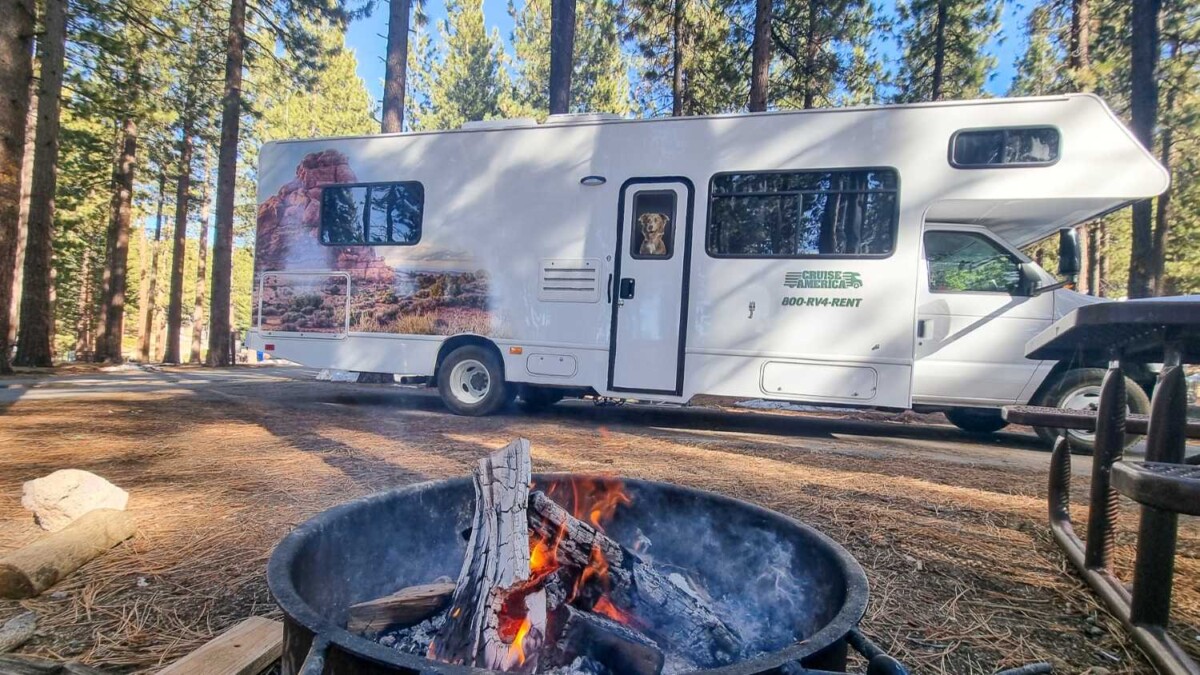
Hiring an RV in the United States sounds straightforward enough until you’re suddenly driving a 30-foot motorhome on the “wrong” side of the road while trying to figure out what propane, hookups and dump stations actually mean.
We’ve road-tripped in both Australia and the USA as a family, and while the idea is similar – freedom, road trips, camping and flexibility- the actual experience is quite different.

Some things are easier in America, while some are easier in Australia. And a few things will completely catch Aussie travellers off guard.
So if you’re wondering how RV travel in the USA compares to Australia, here’s what families should know before they go.
Let’s make sure we’re talking about the same thing
Much like the word ‘thong’ means something very different in Australia than it does in the USA, the word RV can mean different things as well. In this article, we are using the word RV to describe both a motorhome and/or a campervan.
RV travel in the USA vs Australia: Quick comparison
| Feature | Australia | USA |
|---|---|---|
| Driving side | Left | Right |
| RV size | Smaller to medium-sized (rarely over 7.3m/24ft) | Medium-sized to large (up to 13.7m/45ft) |
| Camping style | Caravan parks, national parks, free camps & private property | RV parks dominate |
| Free camping | More common away from the coast | Depends heavily on state |
| Hookups | Less important | Very common |
| Road size | Narrower roads | Wider highways |
| Fuel terminology | Petrol + LPG | Gas + propane |
| RV setup | More off-grid focused | More hookup focused |
| Family attractions | Nature-heavy | Attractions + national parks |
Popular RV hire companies for families
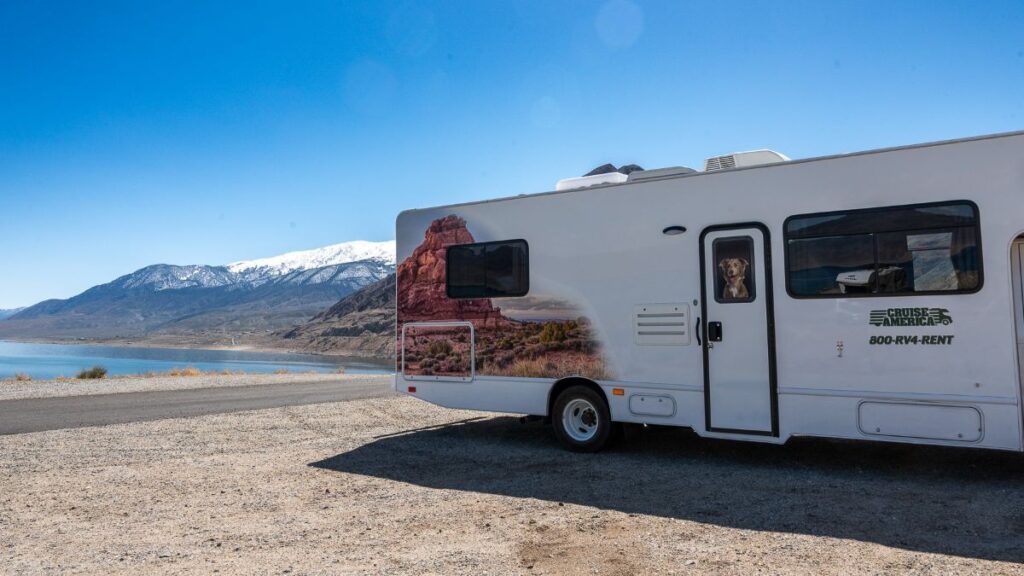
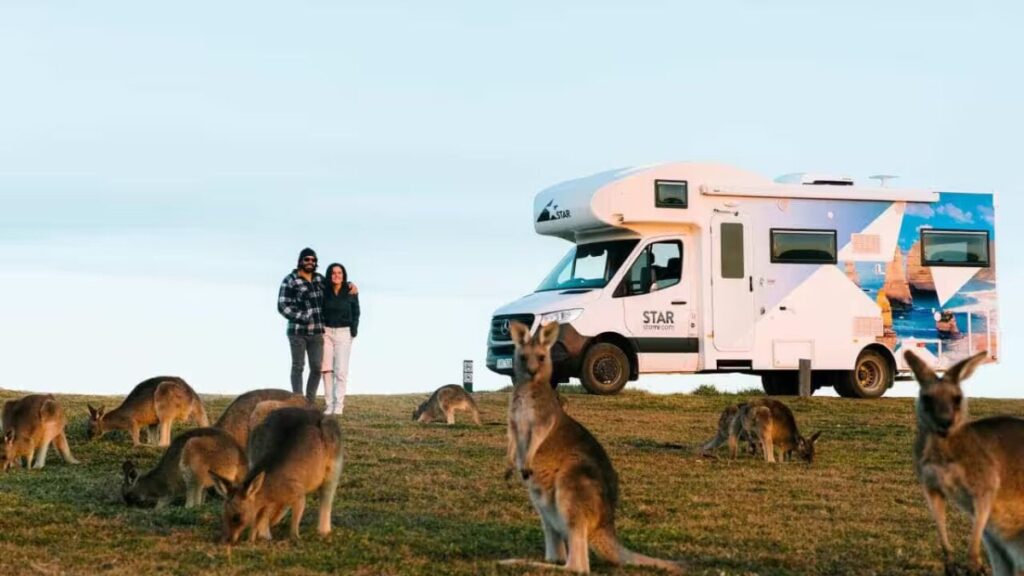
Planning your first RV road trip? These are two of the better-known RV rental companies we’ve personally used for family travel in both Australia and the USA.
| Country | RV hire company | Best for |
|---|---|---|
| Australia | StarRV | Modern family-friendly motorhomes |
| USA | Cruise America | Large USA-wide RV rental network |
Driving on the right side of the road is the biggest adjustment
For most Australians, the hardest part of RV travel in the USA isn’t the RV itself – it’s driving on the right-hand side of the road.
It feels strange at first, especially in larger motorhomes, but most travellers adjust surprisingly quickly after a couple of days.
Roundabouts (or traffic circles, as Americans call them) can scramble your brain initially, and multi-lane highways around major cities can feel intense compared to driving in Australia.
The good news? American roads are generally built for larger vehicles.
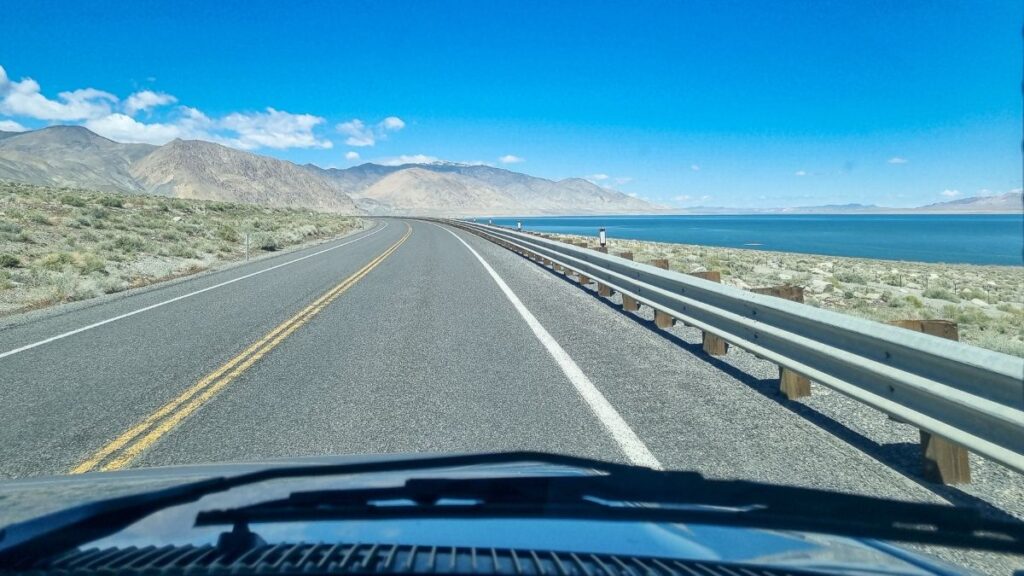
Speaking from experience, roads through places like Nevada and California can feel incredibly RV-friendly compared to many Australian highways. They’re usually wider, smoother and easier to navigate. Although traffic near big cities can be hectic.
One of the smartest things families can do is spend a couple of nights in a hotel after arriving from Australia before picking up the RV. Jet lag and unfamiliar roads are not a great combination.
American RVs are huge compared to in Australia
Australia has plenty of large caravans and motorhomes, but American RVs operate on a completely different scale.
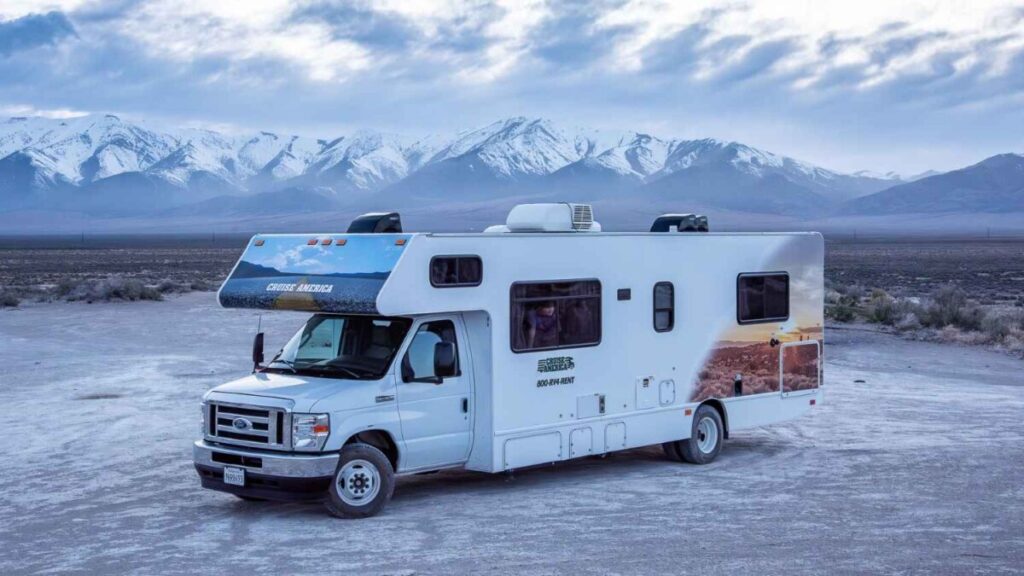
You’ll regularly see motorhomes over 7.3m/24ft in America. You’ll also see large bus conversions and lots more 5th wheelers. Many are like apartments on wheels.
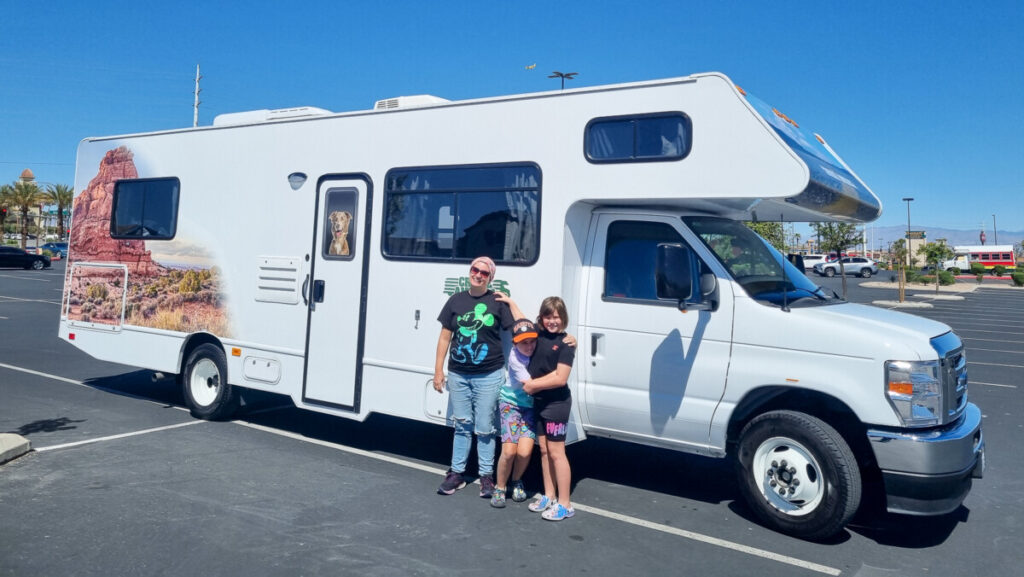
Companies like Cruise America specialise in comfortable American-style RV rentals with a large dealer network.
Meanwhile, Australian RV culture tends to lean more heavily towards campervans and smaller-to-medium-sized motorhomes. We have a lot more caravans, camper trailers, and hybrid campers than 5th wheelers.
In Australia, companies like StarRV tend to focus more on modern touring-style motorhomes that better suit local road conditions and touring styles.
For families, American RVs can actually feel incredibly comfortable thanks to generous living areas, bigger bathrooms, multiple sleeping spaces and larger fridges.
The trade-off is that they’re obviously much larger to drive and park, but some states in the USA feel like they are built for RVs, and it doesn’t feel intimidating at all.
Roads in America feel bigger and busier
American highways are massive compared to those in Australia, and fortunately, most are in much better condition.
Six-lane freeways are common around major cities and traffic can be intense in places like Los Angeles. At the same time, the infrastructure is generally excellent for RV travellers.
Fuel stations are usually easy to access, parking areas are larger and many roads are designed with large vehicles in mind. Compared to Australia, the USA often feels more convenience-focused rather than remote and rugged.
Australia, on the other hand, still feels wilder and more adventurous in many regions, particularly once you head inland or into remote coastal areas.
RV parks in America are a huge part of the culture
This is one of the biggest differences between RV travel in the USA and Australia.
In Australia, many travellers mix caravan parks (called RV parks in the USA) with national parks, free camps, private camping and roadside stops.
In America, RV parks dominate. Particularly when it comes to RV hire, as most hire vehicles aren’t set up for off-grid travelling and need a power hookup.
And some of the RV parks are enormous. Many Australian travellers appreciate the large pull-through sites, which aren’t as common in Australia.
One thing Australians quickly notice is how common full hookups are in the USA. Most RV parks offer not only powered sites with water, but also sewer connections on each individual site. In Australia, individual sites do not have sewer hookups, and you instead need to find a dump station.
That means many American RV travellers stay connected throughout their trip rather than relying heavily on solar and off-grid systems, as many Australians do.
Toilet dumping works differently in the USA
This is one area where things can feel very different for Australian travellers.
In Australia, many motorhomes use cassette toilets that you manually empty at a dump point by removing it from the RV, wheeling or carrying it to the dump point, and tipping it in. Grey water often drains separately through a dedicated hose.
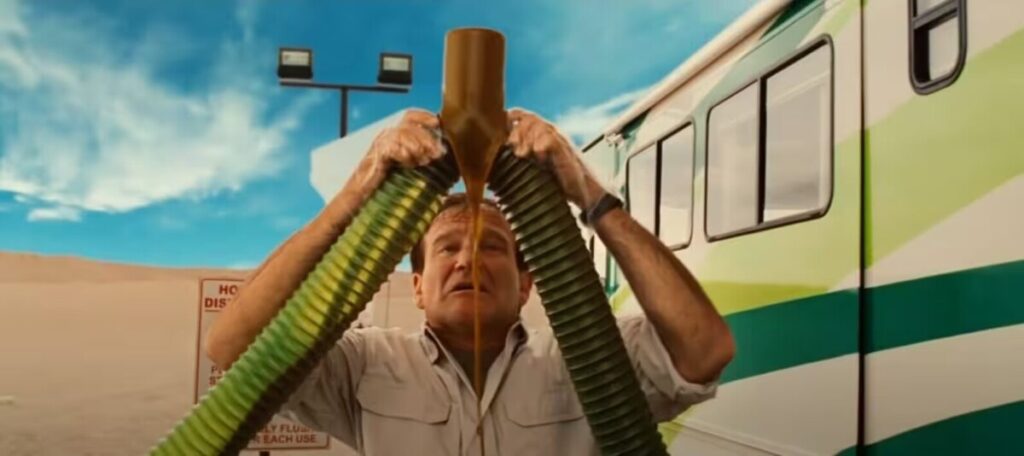
In the USA, most larger RVs use black water and grey water holding tanks instead. At RV parks, you usually connect a sewer hose directly from the RV to the campground sewer connection.
Then comes the glamorous part:
- pull the black tank lever first
- let gravity do its thing
- then empty the grey tank afterwards to help flush the hose clean
It sounds intimidating initially, but most people get used to it quickly. Sadly though, when travelling as a family, the holding tanks still seem to fill up alarmingly fast.
Free camping in the USA vs Australia
Free camping exists in both Australia and the USA, but the experience feels very different.
In Australia, free camping is deeply woven into caravan and camping culture. Whether it’s a bush camp beside a river, a beachside campground or a country town rest stop, many Aussie travellers are properly set up for extended off-grid touring.
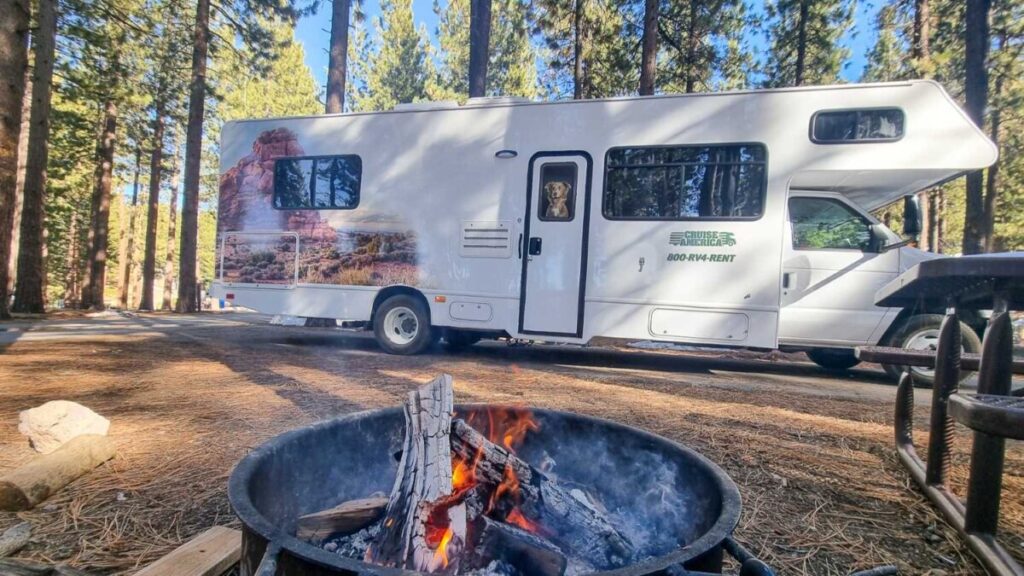
In the USA, free camping – or “boondocking” as Americans call it – definitely exists, but it depends heavily on where you are.
Some states have excellent opportunities, particularly around Bureau of Land Management (BLM) land and national forests in places like Arizona, Utah and Nevada.
In other regions, especially around the East Coast and major tourist areas, free camping can be much more limited and heavily regulated.
The other thing to remember is that most hire RVs in the USA aren’t really designed for long periods off-grid, with fairly average battery capacity, limited solar and smaller holding tanks. Australia is similar in that most owners will have a decent off-grid set-up with plenty of solar, but when hiring, those niceties aren’t usually on offer.
Realistically, if you want to use air-con in a hire RV, you’ll need to stay at an RV/Caravan park with power hookup.
Fuel, gas and propane can be confusing at first
In Australia:
- petrol is fuel
- diesel is diesel
- LPG is gas
In the USA:
- petrol becomes “gas”
- diesel is still diesel
- LPG becomes “propane”
It sounds simple, but it really does take a while to stop mentally translating everything.
In Australia, swap-and-go gas bottle systems are commonly used for LPG/propane, so it’s as simple as swapping it at the petrol station and doing the job yourself. Although if you’re heading inland, it pays to make sure you’ve got a full bottle in case you don’t see a swap-and-go station for a while.
In the USA, the LPG/propane is in a larger tank within your RV and must be filled by a professional at an LPG refill station. So you need to plan accordingly and fill up where you can.
Here are some other word differences that are handy to know:
| Australian term | American term |
|---|---|
| Caravan | Travel trailer |
| Motorhome | RV / motorhome |
| Campervan | Class B RV |
| LPG | Propane |
| Petrol | Gas |
| Caravan park | RV park |
Costs: Is RV travel cheaper in the USA?
Not really. The AUD to USD conversion tends to make it on par, but of course, this depends on the exchange rate, state of the economy, and both how and when you travel.
There is a larger rental market in the USA for RV hire, which often makes it easier to find a more affordable family-sized motorhome.
But families often underestimate extra costs such as:
- insurance
- mileage fees
- campground fees
- generator use charges
- linen hire
- kitchen kits
- national park entry fees
In general, RV travel in the USA can be slightly cheaper than in Australia overall, but due to the exchange rate, it’s definitely not a budget holiday.
Booking ahead matters much more in America
Australia still allows for a decent amount of spontaneity outside peak periods. The USA? Not so much.
Popular campgrounds and national park RV sites can book out months ahead, especially during summer holidays, long weekends and national park peak seasons.
Things America does better for RV travel
The USA is genuinely brilliant at RV infrastructure. Things that feel easier include:
- giant parking lots at supermarkets
- drive-through everything
- pull-through campsites
- sewer connection at your campsite
- large laundromats
- family-friendly RV resorts
- wide roads designed for larger vehicles
America also does family attractions exceptionally well.
Things Australia does better
Australia still wins when it comes to:
- remote camping experiences
- beach camping culture
- relaxed road trip spontaneity
- off-grid touring setups
- rugged adventure travel
There’s also something uniquely Australian about pulling into a quiet bush camp beside a river and having almost nobody else around. That style of RV travel feels harder to find in many parts of the USA.
They’re both great
RV travel in Australia and the USA share the same spirit – freedom, flexibility and adventure – but they feel very different once you actually hit the road.
Australia feels more remote, rugged and off-grid. America feels bigger, more structured and incredibly RV-friendly.
Neither is necessarily better. They’re simply different experiences. So if your family already loves caravanning or motorhome travel in Australia, there’s a very good chance you’ll absolutely love RV travel in the USA too.
Planning your own RV adventure?
If you’re considering your first RV road trip, it’s worth comparing different RV styles, sizes and rental inclusions before booking.
- Australia: Explore motorhome hire with StarRV
- USA: Compare RV rentals with Cruise America
Prices, inclusions and vehicle sizes can vary significantly depending on season and destination.
FAQ
The biggest adjustment is driving on the right-hand side of the road, but most Australians adapt quickly after a couple of days.
Generally, yes. American RVs are often much larger and more luxurious than typical Australian campervans or motorhomes.
Yes, although rules vary significantly between states and regions. Bureau of Land Management (BLM) land and national forests are common free camping options.
Not really. Many hire RVs have limited solar, battery capacity and holding tank sizes
For popular destinations and peak seasons, absolutely. Many campgrounds book out months ahead.
This article contains affiliate links to products. We may receive a commission for purchases made through these links.
Where to next?
📌 Save this article to Pinterest so you’ll have it handy when planning your own trip.
Let me know what you think!