You know the flights I’m talking about. You spot some cheap airfares and immediately start imagining where you could take the family. You click through, start choosing dates and then realise there’s a catch: those bargain fares don’t include checked baggage.
Start adding a suitcase for multiple family members and suddenly those cheap flights aren’t so cheap anymore. In some cases, the fares that include baggage are enough to put the trip out of reach altogether.

But do you actually need checked luggage?
We’ve travelled carry-on only as a family multiple times, and not just for quick weekend getaways. With a bit of planning, packing light with kids is absolutely doable, and it can be one of the easiest ways to keep those bargain flights a genuine bargain.
And before you start picturing one of those impossibly organised packing systems where every item of clothing is beige, coordinates perfectly and can somehow be worn in 17 different combinations, that’s not what I’m talking about. I’m nowhere near that coordinated.
For me, learning how to pack carry-on only is much more practical. It’s about taking what we’ll actually use, leaving behind the things we probably won’t and making smarter choices about what takes up that precious space.
Here’s how we make travelling carry-on only work as a family.
Quick answer: Can a family really travel carry-on only?
Yes, absolutely. We’ve travelled carry-on only with kids multiple times, including on longer trips up to four weeks. The key is to pack clothes you’ll actually wear, limit bulky items like shoes, use a lightweight carry-on bag and compression packing cubes, buy everyday toiletries at your destination and plan to do laundry if you’re away for more than a week.
If carry-on only isn’t practical for a particular trip, consider adding one shared checked bag rather than paying for checked luggage for every family member. Most importantly, check your airline’s carry-on weight and size limits before you start packing, as allowances vary between airlines and fares.
Why travel carry-on only as a family?
To save money on cheap flights
Saving money has always been the biggest reason we travel carry-on only as a family. Quite simply, we probably wouldn’t have been able to afford most of our trips otherwise.
Here’s a real world example from Brisbane to Fiji:
Fiji Airways have some flights listed in October from Brisbane to Fiji for $961 return, so this equates to $3844 for a family of four. These tickets are the cheapest option with no baggage included. The tickets that include baggage are $1,250 return for the same dates. This works out to around $5000 for a family of four and nearly $1,200 more expensive to take checked in luggage.
Now, that original flight for $961 is not even a bargain flight to start with. Imagine the savings if it was!
It doesn’t have to be all or nothing, either. If travelling completely carry-on only isn’t realistic for a particular trip, consider paying for one shared checked bag rather than adding checked luggage for every member of the family. You can still save a significant amount while giving yourself some extra packing space.
While saving money was what originally convinced us to start travelling carry-on only with kids, we’ve discovered there are some other benefits that now make me reluctant to go back to travelling with multiple suitcases.
To get through the airport faster
Travelling with carry-on only can make both ends of the airport experience much easier. If your airline allows you to check in online and head straight to security, there’s no waiting around at the bag-drop counter before your flight.
It’s even better when you land. Instead of standing around the baggage carousel waiting for your suitcases to appear, you can simply walk out of the airport and get on with your holiday. There’s also no worrying about whether your checked bag actually made it onto the same plane as you.
There’s less luggage to wrangle with kids
We all know kids can get a little… whiny… when they’re tired. And when you’re tired yourself, listening to someone complain about how hard it is to drag their suitcase through an airport or train station isn’t exactly the relaxing start to a family holiday you had in mind.
Having less luggage makes it easier to move through airports, but I’ve found the difference becomes even more noticeable once we reach our destination. Getting on and off trains, fitting everything into taxis, navigating stairs and simply walking to your accommodation is so much easier when everyone isn’t hauling around a large suitcase.
Less temptation to overpack
A smaller bag forces you to make decisions before you leave. If there isn’t room for the “maybe I’ll wear this” outfit, it stays home.
I’ve found the same thing happens with souvenirs. It’s very easy when you’re travelling to convince yourself that you absolutely have to buy something because it’s the perfect memento of the trip. Six months later, there’s a good chance it’s sitting somewhere gathering dust.
When you know everything has to fit back into your carry-on for the trip home, you’re much more selective about what you buy. And if you do find something you genuinely love, you still have options. You can post it home or, if you’ve done enough shopping to justify it, add a checked bag for the return flight.
Travelling carry-on only doesn’t mean you can never buy anything. It just makes you think twice about whether you actually want it.
Before you pack: Check your airline’s carry-on rules
Before you start working out how to pack carry-on only, check exactly what your airline allows. There is no point perfecting your packing technique only to arrive at the airport and discover your bag is too heavy, too large or contains something you can’t take through security.
Check the carry-on weight limit
Weight is often the biggest challenge when travelling carry-on only. Many airlines limit carry-on baggage to around 7kg, although you may find allowances of 10kg or more depending on the airline and fare you’ve booked. Seven kilograms disappears surprisingly quickly once you start adding shoes, toiletries, electronics and the bag itself, so check your allowance before you pack rather than trying to remove several kilograms at the airport.
We’ve had occasions where one of our bags has been over the individual limit while the kids’ bags have been well under, and airline staff have been happy to look at what we’re carrying as a family. However, I would never rely on this. Unless your airline specifically says baggage allowances can be pooled, pack on the assumption that every bag needs to meet its individual allowance.
Measure your bag, too
Weight isn’t the only restriction. Airlines also set maximum dimensions for cabin baggage, and there can be separate size restrictions for bags going into the overhead locker and personal items going under the seat. For example, some Australian airlines currently list maximum cabin bag dimensions around 56cm x 36cm x 23cm, but personal-item dimensions vary considerably.
Rather than relying on a general “carry-on size”, check the baggage information for the airline you’re actually flying with before every trip. Airlines can change their policies, and the rules may also differ depending on the aircraft, route or fare.
Does your fare include a personal item?
Check whether you’re allowed to bring a smaller personal item in addition to your main cabin bag and, importantly, whether that item is included within your overall weight allowance.
Airline rules vary considerably here. Depending on your fare, you might be able to bring a handbag, small backpack or laptop bag that fits beneath the seat in front of you, but don’t automatically assume that means you’ve gained another bag’s worth of weight.
Be careful with liquids on international flights
Of all the carry-on restrictions, this is probably the one I find the most frustrating. I’ve unfortunately watched an expensive bottle of sunscreen disappear into an airport security bin before.
Also, few things annoy me more than having to surrender a bottle of water I just paid an exorbitant airport price for, particularly when I bought it so I could take a travel sickness tablet on the plane. Depending on your route and security arrangements, you may not be able to take your bottle of water through a screening point.
For international flights departing Australia, liquids, aerosols and gels are generally limited to containers of 100ml or 100g or less, and they need to meet the relevant security requirements. Unfortunately, a half-empty 200ml sunscreen bottle doesn’t count as 100ml – it’s the size of the container that matters.
Compare the cost of extra carry-on with checked baggage
If you can’t quite make the standard carry-on allowance work, don’t immediately assume you need a checked suitcase. Some airlines allow you to purchase additional cabin baggage weight. Compare the price with adding a checked bag and decide which makes more sense for your family.
You can also mix and match. Perhaps three members of the family can comfortably travel within the standard allowance while one needs extra carry-on weight. Or perhaps everyone travels with carry-on and you add one shared checked suitcase.
The goal isn’t to win an award for travelling with the least amount of luggage. It’s to work out the most practical and affordable baggage combination for your family.
Start with the right carry-on bag
When you’re trying to squeeze everything you need for a holiday into carry-on, the bag itself makes a massive difference. You want something that makes the most of the space you’re allowed without using a huge chunk of your weight allowance.
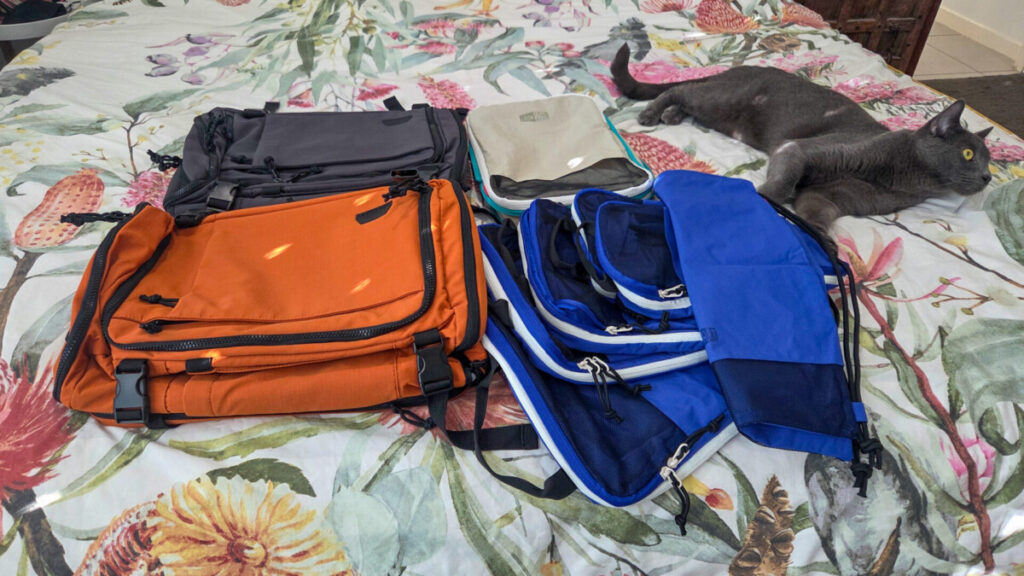
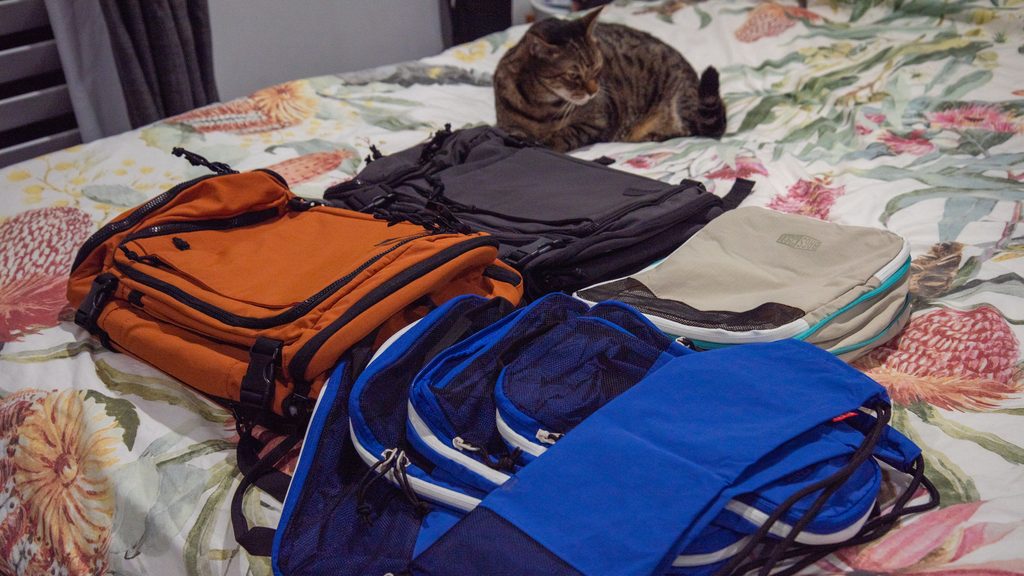
I’ve recently been sent the BAGSMART Blast Travel Backpack to use and I can honestly say that it’s a gamechanger for travelling carry on only. Here’s what I love about it:
The weight and size
Start with the empty weight. If your airline only gives you 7kg of carry-on and your bag weighs 2kg before you’ve put anything in it, you’ve already lost almost a third of your allowance. The BAGSMART Blast weighs around 1.03kg, leaving you much more of that precious packing allowance for your gear.
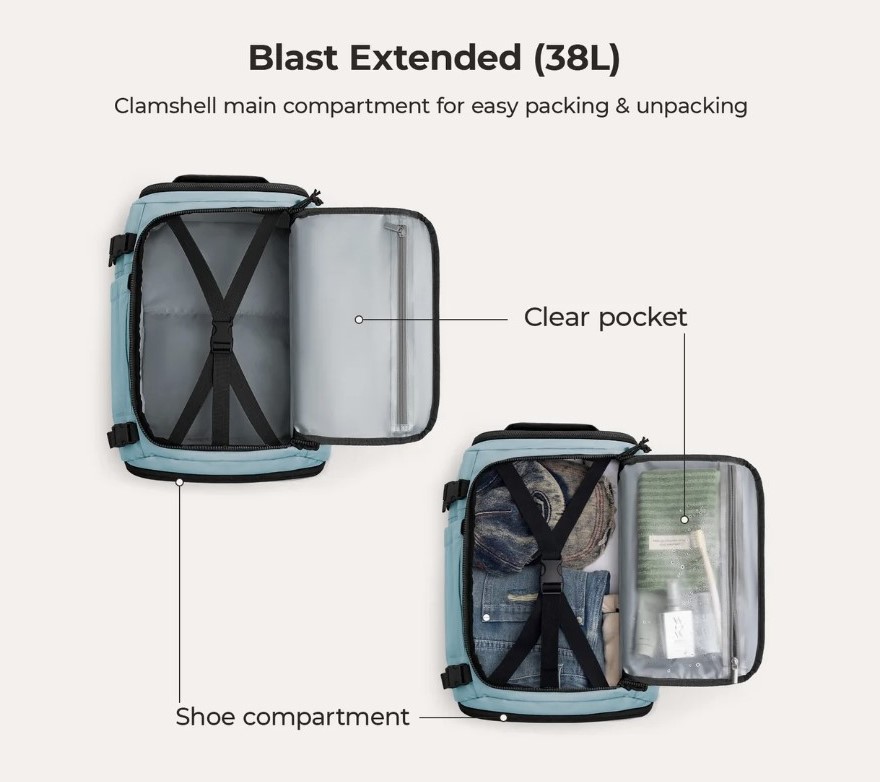
Capacity matters, but bigger isn’t necessarily better when you’re dealing with airline size restrictions. The Blast has a 28L capacity that expands to 38L, giving you some flexibility depending on how much you need to pack. More importantly, even at its expanded size it still fits within the majority of cabin sizing rules.
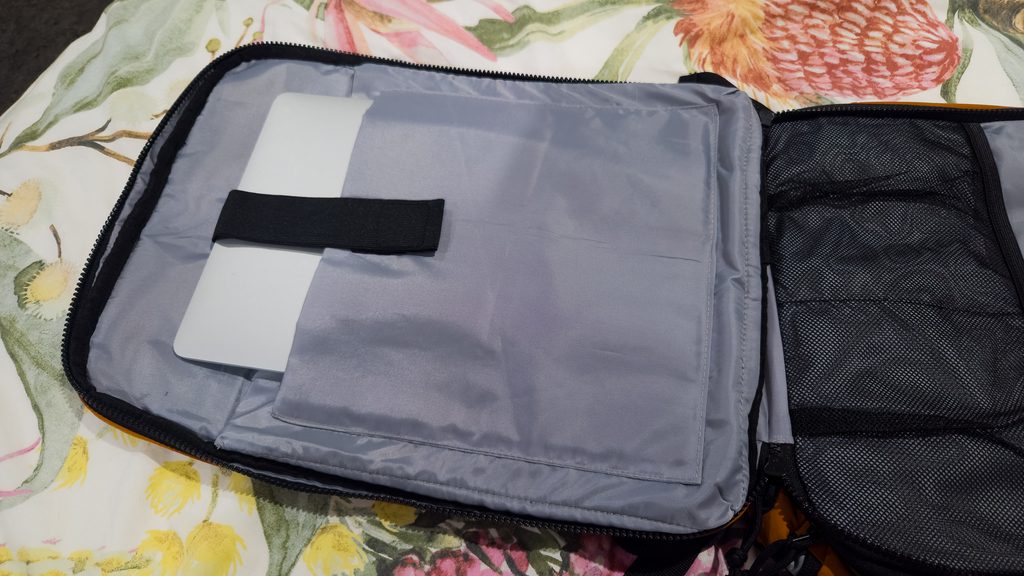
It opens like a suitcase but still has pockets, pockets and more pockets
This is one feature I didn’t know I liked until I had it. Rather than digging down through the top of the bag every time you need something, the Blast opens up more like a suitcase. Once you arrive at your accommodation, you can open it out and actually see what you’ve packed. Combine that with packing cubes and …. heck yeah, now you’re feeling like a woman whose just discovered pockets in her brand new dress.
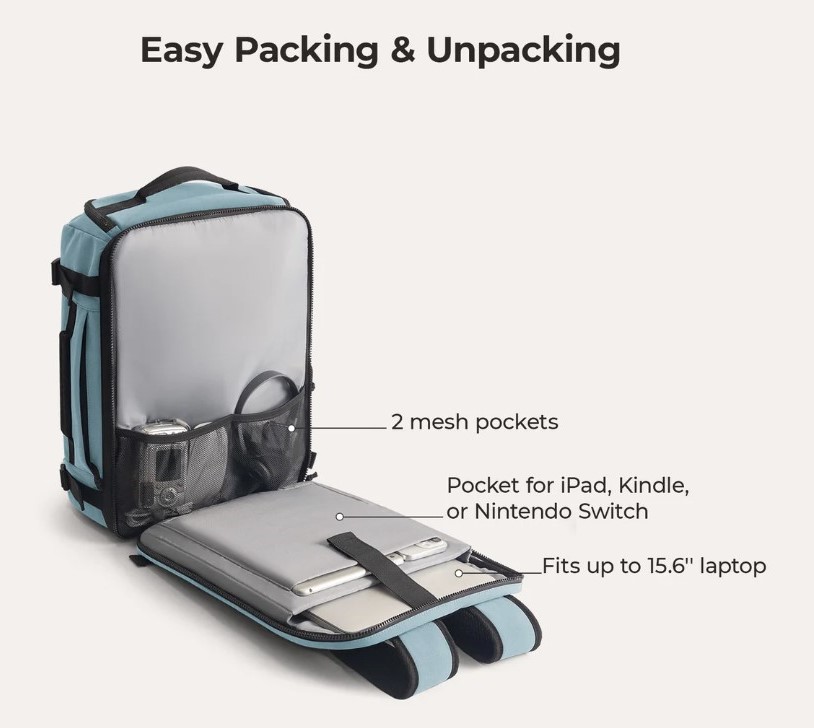
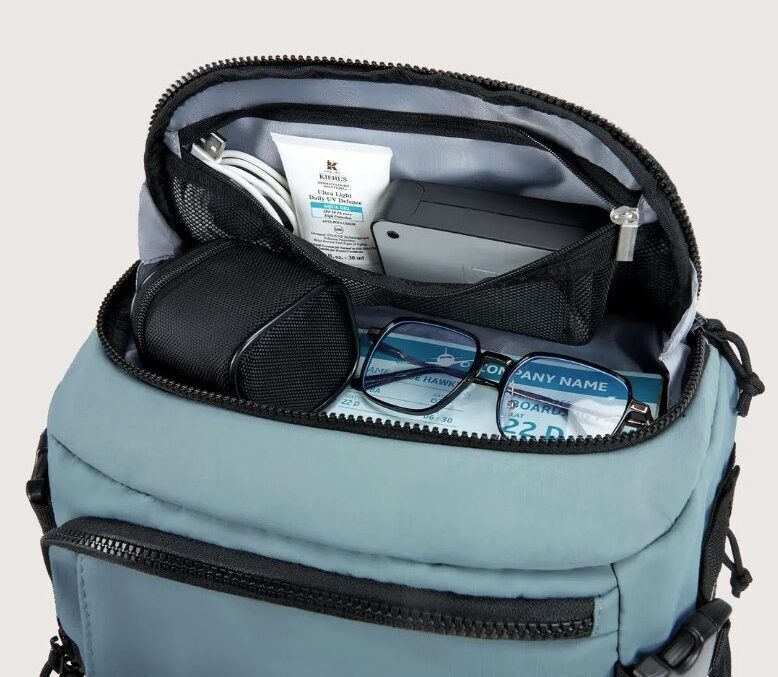
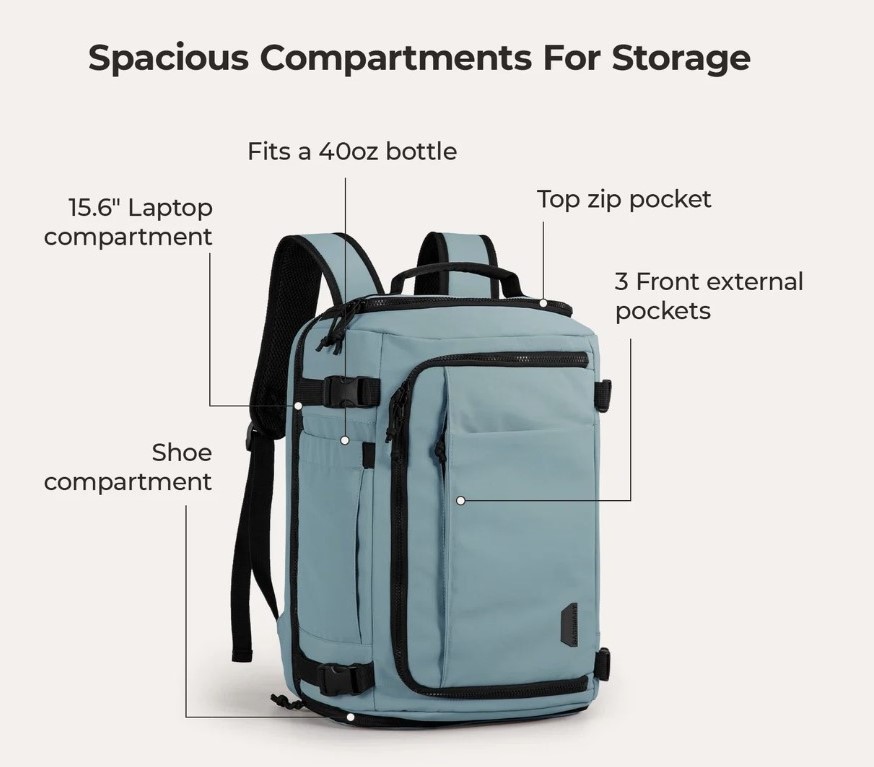
Also, if it wasn’t obvious, I’m a pocket person. Give me somewhere to organise all the little bits and pieces that would otherwise disappear into the bottom of my bag and I’m happy. This is one of the things I like about the Blast. There are separate compartments and easy-access storage for the things you want to be able to grab without opening your entire bag. There’s also two hidden compartments for your valuables which I also love.
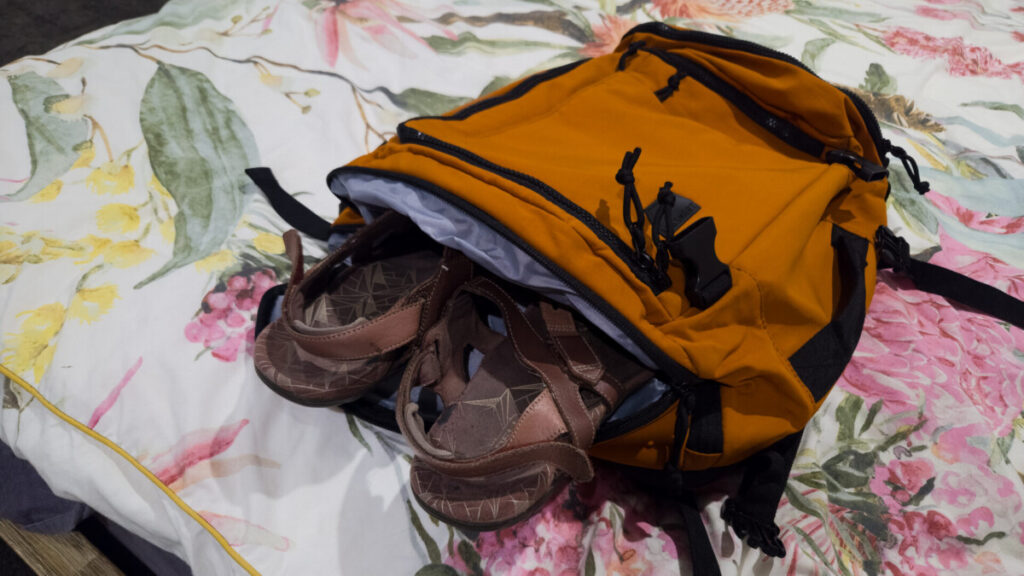
One standout features is the shoe section,which keeps the soles of your shoes away from your clean clothes. Once you’re travelling, you could also use that space to separate dirty underwear, socks or other laundry from everything else.
For electronics, there’s an easily accessible padded laptop compartment and a few extra pockets for other related items. Ease of access for your laptop is important as you’re often asked to take it out to go through airport security.
It’s comfortable to carry
A backpack might look great sitting on the bed while you’re packing it, but the real test comes when you have to carry it through an airport or walk from a train station to your accommodation. The Blast Travel Backpack has padded shoulder strap (adjustable of course), a chest strap should you wish to use it and a design that distributes the weight quite well.
Ultimately, the best carry-on bag isn’t necessarily the one with the biggest capacity or the most features. It’s one that is lightweight, comfortable, easy to organise and, most importantly, works within the baggage restrictions of the airline you’re flying with. BAGSMART’s Blast Travel Backpack is the best I’ve come across so far.
Packing cubes are actually worth it
I know packing cubes can seem like one of those travel accessories you don’t really need, but for carry-on only family travel, I’m a convert. Yes, compression cubes can help you make better use of limited space, but for me, their biggest advantage is organisation.
There are plenty of different ways to use them, and everyone seems to develop their own system. I prefer sorting everything by type. Shirts go in one cube, underwear and socks in another, toiletries in another and so on. My 11-year-old daughter has a completely different approach. She likes putting outfits together, so she’ll pack jeans and a top that she tends to wear together in the same cube.
Neither way is right or wrong. The point is that when you need something, you know exactly where to find it without pulling the entire contents of your backpack apart. This is unbelievably useful when you’re travelling as a family. Without some kind of system, it doesn’t take long for everyone’s clothes, toiletries, chargers and miscellaneous bits and pieces to turn into one giant pile after the first night.
And we all know who they come to first when they can’t find something …. “Muuuuuuuuuuum”.
They’re not just for clothes
Packing cubes don’t have to be used exclusively for clothing, either. I love being able to keep clothes separate from toiletries, and toiletries separate from our family medicines and first-aid supplies. Using one smaller cube as a dedicated medicine bag is really handy when travelling with kids. It means things like travel sickness bags and tablets, pain relief and other essentials are together and easy to find when somebody inevitably needs them.
Just remember that any medicines, liquids or other restricted items still need to be packed in accordance with airline and airport security requirements.
The BAGSMART Compression Packing Cubes
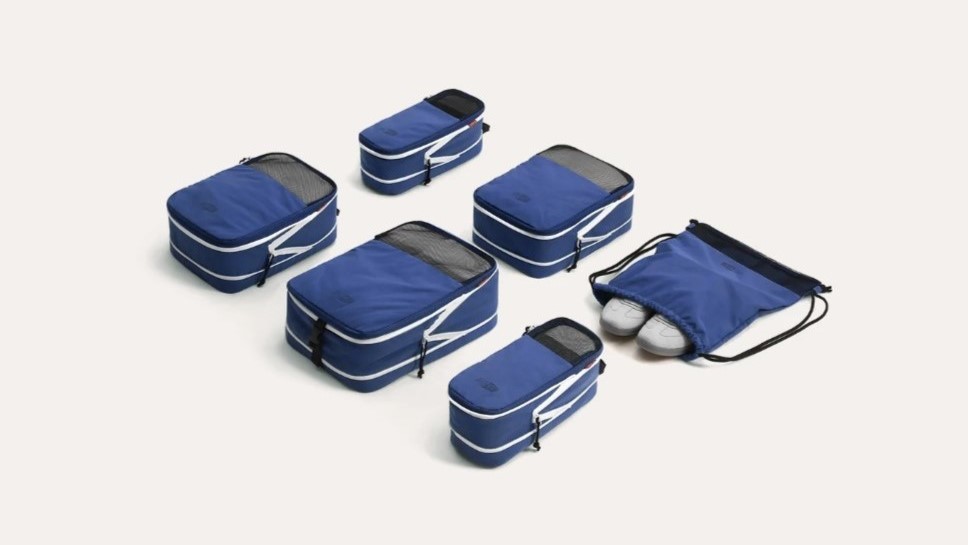
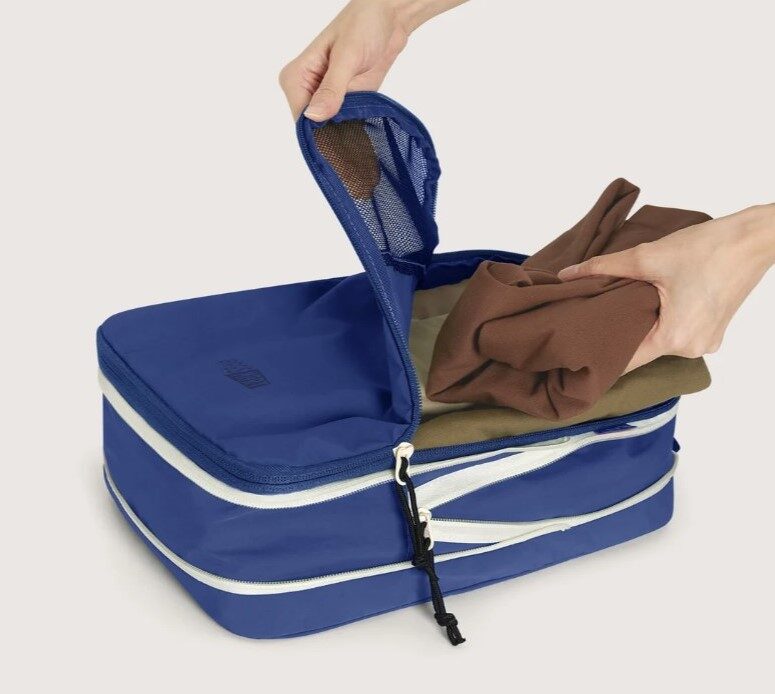
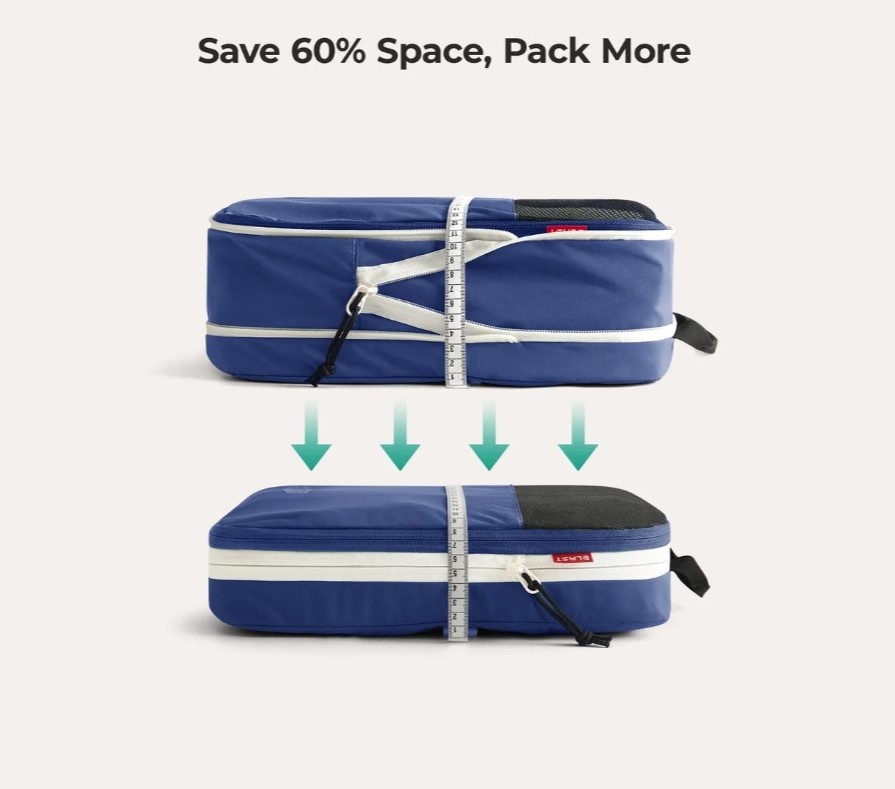
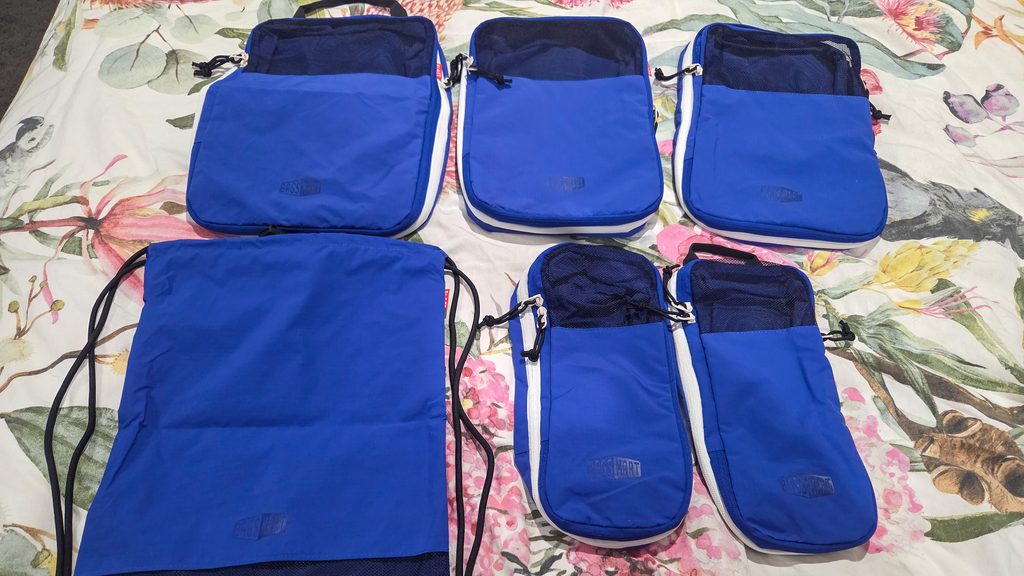
The BAGSMART Blast Compression Packing Cubes I’ve been sent come as a six-piece set in different sizes and fit neatly inside the Blast backpack.
The cubes have an additional compression zip that helps reduce their packed depth once you’ve filled them. I’ve only ever used regular packing cubes in the past and I don’t think I can go back to the old kind now. There’s also a mesh section that provides some breathability while making it easy to see what’s inside each cube without pulling it out and opening it.
One nice suprise is that the set also includes a separate shoe bag. Keeping dirty shoes away from clean clothes is an obvious use for it, but as with all of the cubes, how you use it is ultimately up to you. It would double really well as a day bag when you’re out and about exploring as well.
How many clothes do you actually need?
Search for advice on how to pack carry-on only and you’ll quickly disappear down a rabbit hole of capsule wardrobes, 5-4-3-2-1 packing methods, packing Sudoku and perfectly colour-coordinated outfits where seemingly every top can be worn with every pair of pants.
If that’s how your brain works, fantastic. Mine doesn’t unfortunately.
I’ve also noticed that many of the capsule wardrobes designed specifically for travelling light feature lots of fitted, lightweight clothing that folds down to practically nothing. My bikini days are long gone and, quite frankly, some of those clingy fabrics are not coming on holiday with me no matter how little room they take up.
The good news is that you don’t need a perfectly coordinated capsule wardrobe to travel carry-on only. My rule is much simpler: pack clothes you know you’re actually going to wear. If you don’t normally wear it at home, don’t pack it. And if something only works with one very specific outfit, think carefully about whether it’s worth the space.
How much clothing you’ll need also depends enormously on where you’re going. Packing for a week somewhere warm is completely different from packing for a winter holiday, and a city break will probably require different clothes from a beach trip or an active family holiday.
So rather than following a rigid packing formula, use one as a starting point and adjust it for the destination, weather and what you’ll actually be doing when you get there.
For around a week, I generally start with:
- 3-4 tops
- 2-3 bottoms
- 1-2 dresses
- enough underwear and socks
- bras
- 2 shoes – walking shoes and casual shoes
- something to sleep in
- swimmers
- one jacket
- any destination-specific clothing I genuinely need
And if we’re travelling for longer than a week? I don’t keep adding another week’s worth of clothing. I just do laundry.
Whether that’s using a washing machine at our accommodation, finding a laundromat or handwashing a few essentials, doing one load of washing can save an enormous amount of luggage space. I’d much rather spend a little time washing clothes halfway through a trip than drag around twice as many clothes for the entire holiday.
What about packing carry-on only with kids?
For kids, I usually allow a little more flexibility because the general ability of children to get inexplicably filthy five minutes after getting dressed can quickly destroy the best-laid packing plans. Younger children in particular may need more changes of clothes than adults.
Toys and entertainment needs to earn its luggage space to keep it under weight. If your child needs a favourite teddy or comforter to sleep, absolutely bring it. Five favourite teddies? That’s when negotiations need to begin or you simply need to be firm. Tablets or a phone are incredibly useful when you’re packing light with kids because one device can replace books, games and other bulky entertainment.
It also helps to think about what you could easily buy at your destination. You don’t need to pack for every possible disaster that might happen. If you’re travelling somewhere with supermarkets, pharmacies and shops, many everyday items can simply be bought if and when you need them.
Shoes: This is where you need to get ruthless
Shoes take up an enormous amount of room, they’re surprisingly heavy and, unlike clothing, there’s not much you can do to squash them down. If you’re trying to pack carry-on only, this is where you need to get ruthless.
For most family holidays, I aim for two pairs of shoes per person: one comfortable pair that can handle plenty of walking and one lighter pair, such as sandals, crocs or flipflops/thongs.
Obviously, the destination matters. Hiking, snow holidays and particular activities may require specialist footwear, but for a typical warm-weather or city holiday, you probably don’t need four different pairs of shoes because you might go somewhere fancy.
And whatever your bulkiest or heaviest pair is, wear it on the plane.
Wear your bulkiest clothes on the plane
The easiest way to make more room in your carry-on is to wear some of the things that would otherwise take up the most space. For me, that usually means sneakers or boots, jeans or long pants, and a jumper or jacket. There’s no point stuffing a bulky jumper into your backpack and using up half your available space when you can simply wear it or carry it onto the plane.
And let’s face it, planes are usually freezing anyway, so I’m generally grateful to have that extra layer once we’re in the air. The same principle applies to the kids. If we’re taking jackets or jumpers, they wear or carry them onto the plane rather than having them take up valuable room inside their bags.
Just don’t take this strategy too far. Wearing three jumpers, two jackets and your hiking boots through the airport might technically save luggage space, but it’s not all that practical.
Toiletries without filling half your bag
Toiletries are one of the easiest ways to add unnecessary weight to your carry-on. Full-sized bottles of shampoo, conditioner, body wash, sunscreen and skincare products add up quickly, and on international flights, you also need to consider the restrictions around liquids, aerosols and gels.
My approach is simple. If I can easily buy it at the destination, I don’t need to carry a full-sized version from home.
For basics, our family toiletry packing list generally includes:
- toothbrushes and a small tube of toothpaste
- small roll-on deodorant
- travel-sized sunscreen
- travel-sized moisturiser
- any medication we need
Shampoo, conditioner and body wash are things I’m happy to leave at home because the majority of hotels supply them. If not, they’re usually easy enough to buy once we arrive. The same applies to sunscreen and other products we might need a reasonable amount of during the holiday. I’ll take enough in an appropriately sized container to get us started and then buy more at our destination if we need it.
This becomes even more worthwhile on longer trips. There’s very little benefit in carrying several weeks’ worth of shampoo around the world when you can walk into a supermarket or pharmacy after you arrive and buy a bottle.
Don’t cut corners with medication
Medication is the exception to my “I can just buy it there” approach.
If you or your children require medication, bring what you need rather than assuming you’ll be able to easily find the same product at your destination. Depending on where you’re travelling and what medication you’re carrying, you may also need supporting documentation or need to follow specific rules around bringing medicines into the country.
The goal with toiletries isn’t to go without the things you genuinely need. It’s to stop carrying large quantities of everyday products that are already waiting for you at the other end.
Makeup, jewellery and the “just in case” stuff
This is where you need to be really honest with yourself. If you wear makeup every day at home, then of course you’re probably going to want makeup on holiday. But pack what you actually use. You don’t necessarily need every eyeshadow, lipstick and beauty product you own just because you’re going away.
And if you barely wear makeup at home, you’re probably not suddenly going to start contouring every morning because you’re in Fiji. Personally, I don’t wear makeup every day, so I find this part fairly easy. In the past, I’ve had false eyelashes put on before a holiday so I don’t need to take eye makeup at all. Alternatively, I’ll throw in a mascara and leave it at that.
The same thinking applies to jewellery. Take the pieces you know you’ll wear rather than packing a selection for every possible outfit. Apart from taking up space, travelling with expensive or sentimental jewellery also gives you something else to worry about losing.
Hair tools can be another space killer. Before packing a hairdryer, straightener or curling wand, ask yourself whether you’ll genuinely use it or wether you can make do with the hotel hairdryer and your hairbrush.
Then there are all those “just in case” items. The handbag that only works with one dress. The outfit you might wear if you suddenly decide to go somewhere fancy (you’re probably not if you’re travelling with kids). The accessories you haven’t worn in six months but somehow think will become essential the moment you leave the country.
This is where my rule from earlier comes back into play: pack for the holiday you’re actually taking, not the imaginary holiday you might take. If you use something regularly at home and know you’ll miss it, find room for it. But if you’re putting something into your carry-on while saying, “I probably won’t need this, but…”, that’s usually a pretty good sign it can stay home.
Need a family packing list?
I’ve deliberately kept this guide focused on how to pack carry-on only as a family, rather than listing every single thing you might need for a holiday.
If you’re getting ready for a trip and want something you can actually tick off as you pack, head over to our Family Travel Checklist. It includes a free downloadable packing list covering clothes, toiletries, kids’ essentials, travel documents, tech and even those last-minute jobs to do before you lock the front door.
My rules for making carry-on only work
If you’ve made it this far and are wondering how you’re possibly going to fit everything into carry-on, these are the rules I come back to every time we travel:
- Check your airline allowance before you pack. Know your weight and size limits before you start filling your bag.
- Pack for about a week, even if you’re travelling for longer. Do laundry when you need to.
- Get yourself a proper lightweight carry-on bag with lots of pockets. We recommend BAGSMART’s Blast.
- Wear your bulkiest items on the plane. Think sneakers, your jeans and heavy jacket.
- Stick to two pairs of shoes. Wear the heavier pair and pack the lighter pair.
- Don’t pack “just in case” clothes. Pack for the holiday you’re actually taking.
- Use compression packing cubes. They help make the most of your space and keep everyone’s belongings organised.
- Check what your accommodation provides. You probably don’t need shampoo, conditioner, body wash or a hair dryer.
- Buy inexpensive consumables when you arrive. There’s no need to carry a holiday’s worth of everyday toiletries if they’re readily available at your destination.
- Leave some room. Don’t leave home with your carry-on bursting at the seams.
That last one is particularly important. If you have to sit on your backpack to close it before you’ve even left home, you’ve given yourself nowhere to go. After all, you might want to buy something while you’re away or you might simply want to shove your jumper in there rather than wear it through the hot airport.
When carry-on only doesn’t make sense
As much as I love travelling carry-on only, it’s not the answer for every family or every holiday.
If you’re travelling with a baby and need extra equipment, heading somewhere extremely cold, going on a ski holiday or bringing specialist activity gear, trying to squeeze everything into carry-on can become more trouble than the money you’re saving is worth.
The good news is that it doesn’t have to be all or nothing. You don’t have to go from four checked suitcases to zero.
When we flew from Brisbane to Harbin in China for the Harbin International Ice and Snow Festival, for example, I knew immediately that carry-on only was out of the question. Temperatures dropped to around -25°C and we needed bulky winter jackets, snow gear and proper cold-weather clothing for the whole family.
But we didn’t need four checked bags. Instead, we packed all of our bulky snow gear together into one large checked suitcase. Our thermals, underwear and other smaller items could still go into our carry-on bags. We still had to pay for checked baggage, but only for one bag rather than adding a checked suitcase for every member of the family.
The aim isn’t to travel with the least amount of luggage possible. It’s to avoid paying for baggage you don’t actually need so you can take advantage of those cheaper flights.
This article contains affiliate links to products. We may receive a commission for purchases made through these links.
Where to next?
📌 Save this article to Pinterest so you’ll have it handy when planning your own trip.
Let me know what you think!